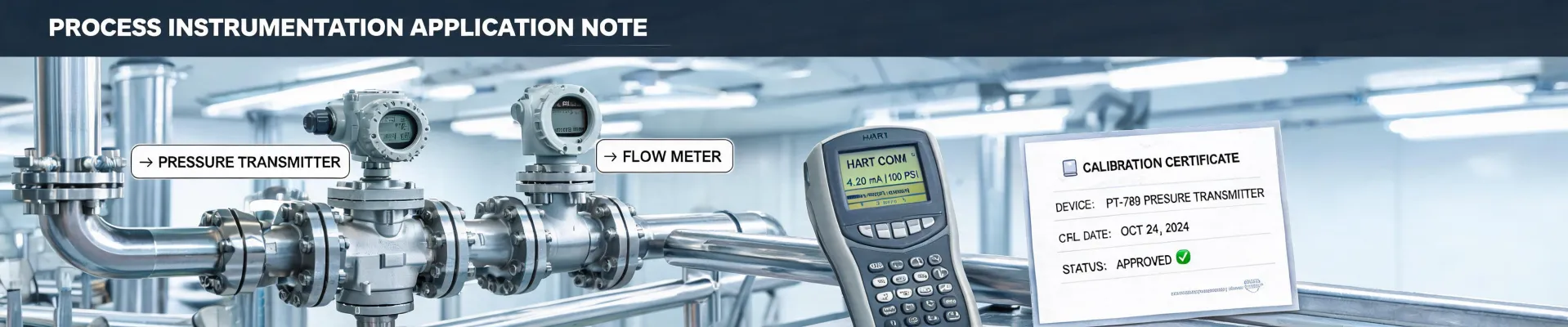
I'm the person who approves or rejects every instrument line before it reaches customers. Over the past four years, that's meant reviewing 200+ unique products annually—pressure transmitters, flow meters, temperature sensors, humidity sensors, differential pressure gauges, and some things that aren't even in the catalog. We rejected around 4% of first deliveries in 2024.
Four percent doesn't sound like much. Unless you're the one explaining why a batch of 50 transmitters failed incoming inspection—and that turned into a $22,000 redo plus a two-week delay in a client's product launch.
Here's what I've learned from inspecting all those instruments: most measurement problems aren't the instrument's fault.
The Surface Problem: Your Readings Look Fine
A customer called last year about a "faulty" dwyer thermistor HVAC and room measurement sensor. Their building management system was showing space temperatures 4°F off from spot readings. They'd already ordered replacements.
We pulled the sensor, ran it through full calibration. It passed everything. Not "within tolerance" passing—dead-on passing.
The culprit? Sunlight. The sensor had been installed where direct sunlight hit it for roughly three hours each afternoon. The sensor was measuring exactly what was there. The environment was the problem, not the device.
That's a pattern I see constantly—across dwyer pressure transmitters in process lines, endodontic microscopes in dental offices, 24 digital calipers on machine shop floors, and even the chronic insulation tester vs megger debate among electricians. The instrument gets blamed for problems that are really placement issues, specification mismatches, or assumptions that never got verified.
The Deeper Problem: "Quality" Is More Than Accuracy
Most people treat "quality" as a synonym for "accuracy." It's not. Accuracy is just the entry ticket.
In my world, instrument quality has at least four dimensions:
- Accuracy—how close the reading comes to the true value.
- Stability—how well it holds that accuracy over months and years.
- Repeatability—whether it produces identical readings under identical conditions.
- Environmental robustness—how it holds up when temperature, humidity, or vibration shifts.
I reject more products for stability problems than for accuracy problems. And the buyers never see it coming, because they never re-verify instruments after installation.
That's the deep problem. Not individual bad sensors. It's the industry-wide assumption that once a device reads "reasonable," it'll read that way forever.
It won't. Everything drifts. It's physics. The real question is how fast, and whether the drift is predictable enough to catch during calibration.
This is where standards like ISO 9001 come in. They exist for a reason: documented quality systems catch these issues before they reach you. When someone skips those systems to save a few dollars per unit, you're the one absorbing the risk.
What Bad Data Actually Costs
Let's make this concrete, because the costs are rarely visible on a purchase order.
Energy waste. A temperature sensor reading 3°F high in an HVAC system means your equipment runs longer than it needs to. ASHRAE research has hammered on this for years—over-conditioning is a major driver of building energy use. One facility manager I worked with cut his annual energy spend by 9% after we replaced a batch of drifting sensors with properly specified dwyer sensors. They paid for themselves in months, not years.
Process and product losses. In food, pharma, and chemical processing, measurement accuracy drives product consistency. I've seen an entire batch rejected—not because the process actually went wrong, but because a sensor drifted and the control system made decisions on bad data. The lab results were fine. The sensor was lying.
Time waste. This one hides in plain sight. Every "is this reading right?" question triggers an investigation. Your highest-paid people end up chasing ghosts. I've honestly lost count of false alarms that traced back to placement, wiring, or drift rather than an actual process problem.
Compliance risk. And then there's the scary one. If a regulated process depends on monitoring data, inaccurate readings mean you're not actually proving compliance. You're just printing paper that looks compliant.
What To Do Differently (Keep It Simple)
I'm not here to tell you to buy the most expensive instrument every time. I'll tell you the opposite, in fact.
First, match the instrument to the application. A dwyer thermistor temperature sensor is a workhorse for space temperature measurement—stable, accurate, and built for exactly that role. It's not designed for pharmaceutical batch monitoring. Buy equipment that fits the job.
Second, think about placement from the start. I went back and forth with a client for two weeks over transmitter locations—they wanted to install sensors next to equipment for easy access; I pushed for proper sampling positions. It felt like bureaucracy. They finally agreed, and the false-alarm complaints that had bugged them for two years stopped. Not ideal, but workable. Actually, better than workable—zero erroneous alarms since.
Third, verify periodically. Even the best instruments drift, which is why our calibration program is NIST-traceable. A quarterly or semi-annual check—depending on how critical the process is—removes the silent drift problem. It's ordinary maintenance, like changing oil in a fleet vehicle.
Fourth—and this part I feel strongly about—buy from people whose quality discipline you trust. Not because they're infallible. Because when a problem does happen, they answer the phone. I've seen decades-old dwyer Magnehelic differential pressure gauges still in service, still performing to spec. That's not an accident. That's what a proper quality system produces over time.
The Bottom Line
Measurement is the foundation of every process decision. If the foundation's off, everything built on top of it is off. Not dramatically. Silently. Expensively.
In my opinion, most decisions about instruments focus on the wrong numbers. Price per unit. Initial accuracy specs. The numbers that actually matter—stability over time, environmental tolerance, placement, and the quality system behind the brand—are the ones nobody asks about.
I have mixed feelings about the trend toward "good enough" instrumentation. On one hand, I understand budget pressure; everyone's trying to squeeze more out of less. On the other hand, I've seen the operational chaos that false confidence creates. A $30 sensor that saves you $70 on purchase price can easily cost you thousands in energy waste and investigation time.
You don't have to take my word for it. Just ask yourself one question: when was the last time you verified that your measurements were still true?
The silence you're hearing is the answer.