-
1. Lock Down the Measurement Requirement Before You Look at Products
-
2. Ask for Total Cost, Not List Price
-
3. Plan for Calibration Before You Place the Order
-
4. Verify Every Spec in Writing
-
5. Check the Installation Ecosystem, Not Just the Device
-
6. Keep a 12-Month Vendor Scorecard
-
Common Mistakes I Still Watch For
About three years ago, I took over purchasing for a 120-person custom manufacturing company. Since then, I process 60 to 80 orders a year through eight different vendors. I'm not an engineer. I'm the administrator who keeps engineers from getting annoyed and finance from yelling. Some orders are as simple as a digital multimeter. Some are as complicated as an HPLC system price negotiation. If you've ever been asked about a Dwyer transmitter or a pH meter, this checklist is for you. It's six steps. The last one is the one most people skip.
1. Lock Down the Measurement Requirement Before You Look at Products
Before I search for any part number, I write down four things: parameter, range, output/communication, and installation environment. If someone just says sensor, I ask: sensor for pressure, temperature, humidity, or air velocity? If they say transmitter, I ask for the signal type. This sounds basic, but it's the step that saves the most money.
Take the dwyer magnehelic differential pressure indicating transmitter. It's a workhorse in HVAC and process applications. But there is a big difference between an indicating gauge and a transmitter with a 4-20 mA output. If you order the wrong one, the installation stops. I learned that after a rush order landed with no output terminal.
Same story with a dwyer temperature and humidity sensor. Is it wall mount or duct mount? 0-10 V, 4-20 mA, or Modbus? What accuracy class do you need at the temperature where you actually operate? Write those answers down. Comparing quotes without them is a waste of time.
2. Ask for Total Cost, Not List Price
Look, I'm not saying you should ignore the list price. I'm saying the list price is one small line in a much larger calculation. Total cost includes shipping, import fees, lead time, calibration certificates, spare parts, training, engineering time, and the cost of downtime when something doesn't work.
Here's the thing: the cheapest quote is often the most expensive order. I saw this when our lab manager asked for an HPLC system price. One quote was lower for the instrument itself, but it did not include a preventive maintenance contract, the column set, installation qualification, or the consumables needed in the first year. The second quote was higher on the instrument line, but the three-year total cost was lower. If we had bought on list price alone, our annual operating cost would have been thousands more.
Bottom line: I put every quote into a TCO spreadsheet. Columns include purchase price, estimated delivery date, calibration cost, replacement parts, service calls, and expected lifetime. If a rep can't help fill in those columns, that's a red flag. Honestly, I'm not sure why some suppliers quote aggressively short lead times. My best guess is they want the order and will ask for timeline forgiveness later. I now treat quoted lead time as a test, not a promise.
3. Plan for Calibration Before You Place the Order
If you can't calibrate it, it's an expensive guess.
Every measurement instrument drifts, and if you don't have a calibration plan, your data will eventually be nonsense. Decide before you order who will calibrate it, how often, and which reference equipment you need. For a field instrument, you may need a hand pump, a test gauge, or a loop calibrator. For a lab pH meter, you need fresh buffers and a thermometer.
A lot of people type “how to calibrate ph meter mettler toledo” into Google, and then blindly follow the first video. I've done that too. Turn to the official manual and the buffer instructions first. Use fresh buffers at or near the sample temperature. Rinse the electrode between buffers. Don't wipe the glass bulb. But here's the part most people miss: if the buffers are old or expired, the entire calibration is wrong. Add buffers to the same purchase order as the meter. Trust me on this one.
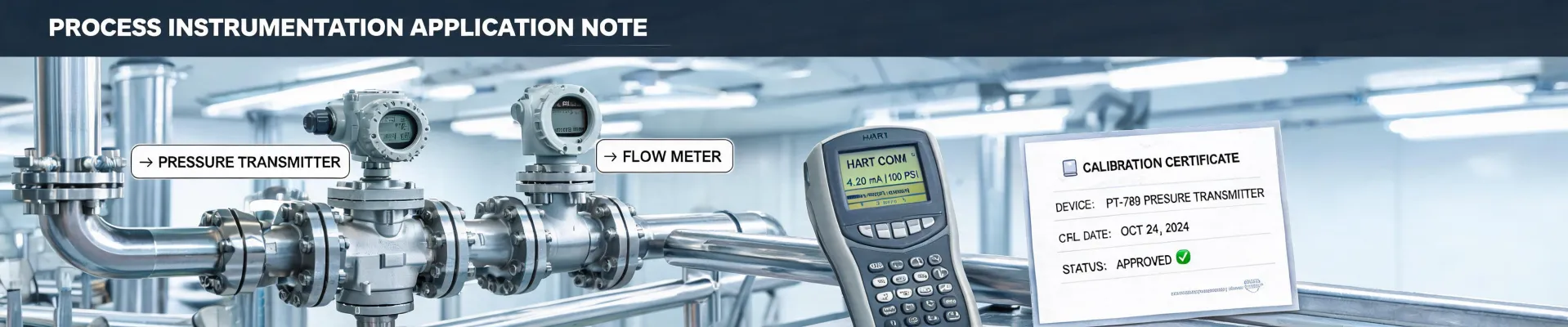
For a pressure instrument like a dwyer magnehelic differential pressure indicating transmitter, ask for a NIST-traceable calibration certificate at the quote stage. Adding it later usually costs more time and money.
4. Verify Every Spec in Writing
I don't trust “it's compatible” or “yes, it can handle that.” I ask for a datasheet and a connection drawing. If the spec is critical, I ask for it in the quotation as an approved submittal.
Per FTC guidelines (ftc.gov), product claims have to be truthful and substantiated. That's a useful purchasing rule too: ask the vendor to substantiate the spec. If they can't or won't, that is a red flag. It's not about being difficult; it's about avoiding a replacement order.
With a dwyer temperature and humidity sensor, don't just look at the sensor accuracy. Check the total accuracy across the operating temperature range, including the probe and electronics. With a digital multimeter, check the CAT rating, the accuracy specs, and whether the leads are included. A display with many digits is not the same as a meter that is accurate in the range you actually use.
5. Check the Installation Ecosystem, Not Just the Device
This is the step I skipped early on. The instrument might be perfect, but it also has to fit into your physical system. I now ask about process connections, mounting brackets, cable length, enclosure rating, supply voltage, hazardous area approvals, and operating environment. Do not assume these are included.
Example: a humidity sensor on paper has great specs, but the probe cable is four inches too short for your duct. A pressure transmitter needs an impulse line, a manifold, or a specific fitting. A lab instrument quote—whether HPLC or pH meter—needs a bench with power, waste handling, and maybe purified water. If you're buying a digital multimeter, check whether it comes with a carrying case or only a test lead set. Not ideal? It's workable, but it's annoying.
I call this the installation ecosystem. Ask the vendor for the installation instructions before you order. If they don't have them, that tells you something.
6. Keep a 12-Month Vendor Scorecard
Here's what I wish I had done from day one. Keep a simple spreadsheet for each vendor. Columns: order date, promised lead time, actual lead time, invoice accuracy, calibration cert included, defects, response time. Review it quarterly. After twelve months, patterns show up that you won't notice while you're buried in daily email.
When I compared our Q1 and Q2 purchases side by side—same vendor, different specs—I finally understood why the details matter. One product had 0.25% accuracy; another had 2%. Both worked. The 0.25% went into a process loop that needed steady control. The 2% went into a noncritical alarm. If I had not written down the specs, I would have assumed we overpaid for the first one. We didn't. It was the right investment.
My experience is based on several hundred mid-sized orders across HVAC and process instruments. If you're buying lab-grade equipment or explosion-proof instruments, your requirements will be different. But the scorecard habit transfers.
Common Mistakes I Still Watch For
A few things come up again and again:
- Buying more accuracy than the application needs. Higher accuracy can mean more expensive calibration and more sensitivity to environmental changes. Define the required accuracy, not the maximum available accuracy.
- Forgetting that pH buffers expire. Expired buffers quietly ruin calibrations. Write the opened date on the bottle.
- Comparing quote prices without comparing lead times. A 10% price difference is meaningless if one vendor can deliver in two weeks and the other in ten.
- Ignoring spare parts and accessories. A pressure transmitter without a mounting bracket is a pressure transmitter sitting on the floor.
If you take one thing from this article, make it this: write down your requirement, calculate the total cost, and calibrate before you install. A dwyer transmitter is only useful if it's specified correctly, just like any instrument.