Services

Dwyer service support keeps instrument decisions documented.

Service work in process instrumentation is rarely only a repair ticket. A pressure transmitter may need a new range, a flow meter may need a revised installation note, and a temperature loop may need a calibration record that names the standard, the uncertainty and the approval region. Dwyer keeps those details together so the buyer, technician and QA reviewer are not comparing separate emails after the order is placed.

This guided service page follows the SVC-C structure from the manifest: a concise hero, two-column service cards, an inline FAQ, a before-and-after comparison and a final inquiry form. The language stays practical because the minimal-efficient persona should reduce the number of steps between a field symptom and a defendable next action.

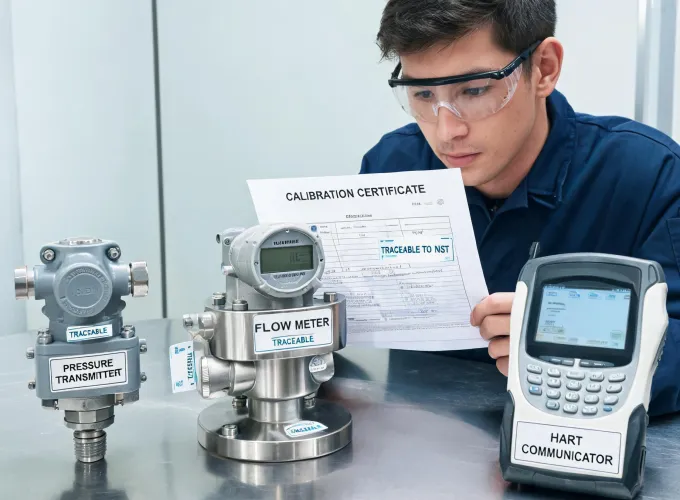
Technician reviewing calibration sheet beside process instruments

Loop specification review

Dwyer checks media, range, process connection, enclosure rating, electrical output and approval region before a shortlist reaches purchasing. The review can flag when an air velocity transmitter, differential pressure gauge or water flow meter needs a different material or mounting arrangement than the original request implied.

  • Range and turndown check
  • 4-20 mA / HART output review
  • ATEX or MID note when relevant

Calibration and documentation routing

For instruments that need calibration evidence, Dwyer organizes the certificate path around ISO/IEC 17025 scope, NIST traceability and reported uncertainty. The goal is to leave the receiving team with a file that names the standard used, the result recorded and the next interval to consider.

  • Certificate chain review
  • Before and after data request
  • k=3 documented uncertainty support

Replacement and upgrade matching

When a legacy Dwyer pressure switch or Magnehelic differential pressure gauge reaches the end of service, the team can compare the installed conditions against current product lines instead of choosing from model names alone. That keeps panel cutouts, process fittings and signal wiring visible.

  • Installed base cross-check
  • Accessory and fitting review
  • Lead time awareness

Distributor-ready RFQ packaging

Dwyer turns application notes into a cleaner RFQ so authorized distributors can quote complete packages. A request that includes media, ambient exposure, accuracy class, output and approval region is less likely to produce a partial quote or a replacement that cannot be installed.

  • Application summary
  • Accessory list review
  • Documented assumptions

FAQ

Questions that should be settled before the purchase order.

Start with range, media, line size, process temperature, output signal, enclosure rating and approval region. If the instrument will be used in a hazardous area, include the required Zone and Ex marking.

Name the parameter, range points and traceability expectation. For audit files, ask for ISO/IEC 17025 scope where applicable, NIST-traceable standards and the reported uncertainty basis.

Yes. A single RFQ can cover pressure, flow, level, temperature, sensor and environmental monitoring lines when the operating envelope is clear for each measurement point.

Before Dwyer review

The team starts with a model number, a missing certificate, a vague media description and a delivery deadline. The buyer asks for price first, the technician discovers a mounting issue later, and QA receives a calibration document that does not match the audit file.

After Dwyer review

The RFQ includes range, media, output, approval region and certificate expectations. The instrument shortlist is narrower, the distributor understands the accessories, and the final package can be checked against the process loop before installation.

Service inquiry

Send the installed condition and the document you need at receipt.

Dwyer can only shorten the service path when the application facts arrive with the request. Include the range, media, signal, region and certificate expectation so the first response is useful.

Specification request

Send your process instrumentation details

Share range, media, accuracy class and approval region. Dwyer will route the request to the correct application specialist.