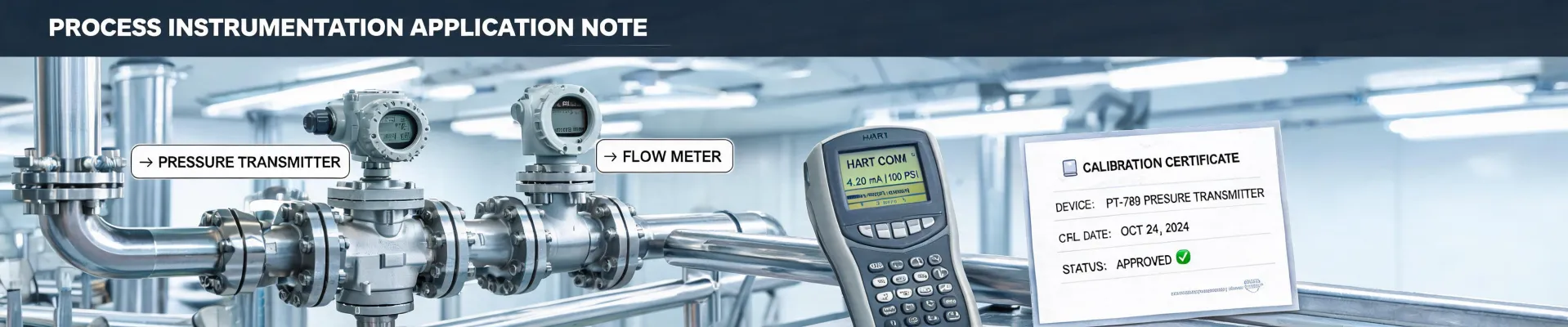
I'm the office administrator for a 160-person manufacturing company in Ohio. I manage maintenance-related purchasing—roughly $150,000 a year across 35 vendors—and I report to both operations and finance. I don't calibrate instruments, and I don't pretend to read process and instrumentation diagrams. But after five years of buying them, I have a strong opinion: most industrial instrument problems start when someone treats the manufacturer and model as optional.
When I took over purchasing in 2020, I treated a part number like a box of printer paper: find a lower price, place the order, move on. I trusted online listings to tell the truth. The collapse happened in March 2023. A maintenance supervisor asked me to replace a Dwyer differential pressure gauge. I found a lower-priced option from a newer vendor because the listing claimed it was a direct replacement. I didn't verify calibration paperwork, product support, or basic invoicing. The product arrived without documentation, finance rejected the invoice, maintenance lost time waiting for a reorder, and the vendor charged a restocking fee for the return. It wasn't the most expensive mistake in company history, but it was the one that changed my process.
People in operations had warned me about this. They told me to qualify a new supplier before ordering. I only believed it after ignoring that advice and watching the fallout. When your own desk eats the restocking fee, the lesson becomes sticky.
The issue is not brand loyalty. It is role clarity.
I know someone reading this will think I am defending one manufacturer. I'm not. I genuinely do not care whether every instrument we buy says Dwyer on the label. I care that the person who specified the part understands what it is supposed to do. If a technical lead approves a different brand, I will order it without complaint.
But when I see a request for a Dwyer flow meter, I assume the maintenance team has used that meter before. They know its connections, its outputs, and its normal failure modes. If I substitute another brand to save $75, I'm transferring a hidden job to them: evaluate the new product, compare the spec sheet, verify compatibility, and decide whether to test it. That hidden job costs more than $75.
The same reasoning applies to a Dwyer differential pressure gauge, especially a Magnehelic model. Those gauges are all over older plants. A request usually means we need the same unit that is already installed, or at least a unit with the same range, mounting, and connections. I can't confirm all of that from memory. The technical person can.
Advertising rules have a useful word for this. Under FTC advertising guidance, claims should be truthful and substantiated (ftc.gov/business-guidance/advertising-marketing). I'm not a regulator, but I use that test when a vendor says a product is a direct replacement. If they can't show a datasheet or another form of evidence, they aren't quoting me a product. They are quoting me a hope.
The search query problem
Some purchasing questions are impossible to answer from search results alone. I see searches like what is the best multimeter for electricians or how does a megger insulation tester work and I understand why people ask them. A buyer wants a quick answer. But the quick answer is usually wrong because it ignores the person, the application, and the environment.
What is the best multimeter for electricians? Honestly, it depends. One electrician might need a higher category rating because they work near industrial panels. Another might need a smaller form factor for cramped junction boxes. A third may prefer a model that matches the rest of their tool brand. A short online list won't know that.
The same problem appears when someone asks me how does a megger insulation tester work. I can explain that it measures insulation resistance. That does not tell me which voltage the technician needs, what leads the job requires, or whether the unit must be calibrated before use. What I should do is pass the question to the person who will use it.
Last month, an engineer asked me to quote an inductive ring sensor. I had no idea what it was. The supplier asked for output type, cable length, and sensing direction. I could have guessed just to look efficient. Instead, I forwarded the questions to the engineer and waited. It took one extra email and probably saved a $700 reorder.
What has changed since 2020
The purchasing environment has changed too. More vendors now sell through marketplaces, more listings are merged from wholesalers, and more product titles are written by people who have never touched the equipment. What was enough in 2020 is not enough in 2025. The fundamentals have not changed—order the specified item, verify documentation, and get technical approval before substitution—but the execution needs more checks.
I also have to answer the obvious objection: cheaper alternatives are not always bad. I agree. If an engineer compares two brands and approves the less expensive one, I am happy to place that order. The problem appears when a purchasing process encourages substitution by default. By default, a substitute should require a technical decision, not a spreadsheet decision.
Here is my current process:
- If a requisition names a manufacturer and model, I do not substitute without written technical approval.
- If someone asks a broad question like what is the best multimeter for electricians, I ask them what features they need before searching.
- If a new supplier claims compatibility with a specified Dwyer flow meter or Dwyer differential pressure gauge, I require a datasheet, calibration documentation, and proof that their invoices will not cause a finance problem.
My conclusion
I don't think Dwyer is the only instrumentation brand worth buying. I think the person who specifies the product should decide when another brand makes sense. As the person who places orders, my most useful skill is protecting that decision, not overriding it.
So ask me what is the best multimeter for electricians and I will tell you, reasonably, that it depends on the electrician. Ask me how does a megger insulation tester work and I will tell you that I don't need to be the expert. I need to buy the right unit, with the right documentation, for the right person. That is also why I keep buying Dwyer flow meters and Dwyer differential pressure gauges until someone technical tells me otherwise.