-
Scenario 1: Permanent process measurements that other people rely on
-
Scenario 2: Live troubleshooting and signal checking without cutting the loop
-
Scenario 3: Part detection and inspection — laser sensor or vision system?
-
How to tell which scenario you're in
-
Final thought: quality is something the customer sees
If you're searching for a Dwyer dp sensor, a Dwyer IEF-SN electromagnetic flow meter, or a 771 milliamp process clamp meter, you probably fall into one of three different buying situations. I didn't understand that for years. I bought instruments using the same logic every time: find something with the right threads and output, check the price, order it. Then I built a mental list of expensive mistakes that would've been avoidable if I'd asked a simpler question first: what happens after this measurement?
I've worked with industrial and HVAC instrumentation since 2018, mostly on the maintenance and project side. I've made enough bad procurement calls to know that there isn't one sensor or meter that fits every job. That's why I now split buying decisions into three practical scenarios.
Scenario 1: a permanent pressure, flow, or level measurement that feeds reports, control loops, or customer documentation. Scenario 2: portable troubleshooting where you're checking live signals in the field. Scenario 3: automated inspection of parts and products, where you're choosing between single-point sensors and vision systems.
Scenario 1: Permanent process measurements that other people rely on
If you need to replace a pressure transmitter on a chiller loop or a process line, you might open your search with something like “dwyer dp sensor.” What you probably want is a short list of process-compatible products, not a science lesson. But the list depends on media, static pressure, temperature, output signal, hazardous area rating, and what the customer's spec says. That sounds like a lot. It's still less expensive than choosing wrong.
I still kick myself about one differential pressure sensor I selected after comparing prices for almost two weeks. I saved about $100 on a replacement that looked identical, but I overlooked that the line had a higher static pressure during startup surges. The sensor lasted about a month. We paid for overnight replacement plus two service trips, which was roughly $850, and that number didn't include the customer's annoyance. (Mental note: I now put certified specs in every purchase request.)
For conductive liquid flow metering, something like the Dwyer IEF-SN electromagnetic flow meter is a whole category, not a single price point. If you search for a “Dwyer IEF-SN electromagnetic flow meter price,” you'll see why pricing is spread out. The electrode material, liner material, connection size, and output all change the number. I once chose the cheapest electrode option because the fluid was mild at the time of approval. Six months later, the fluid had changed, and so did the electrode performance. We didn't need a new flowmeter. We needed a better specified one from the beginning.
Scenario 2: Live troubleshooting and signal checking without cutting the loop
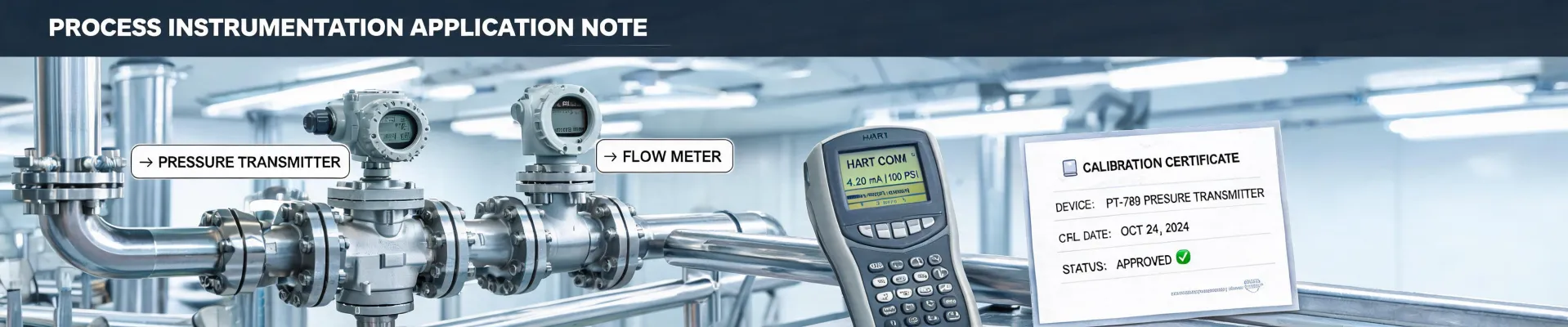
This is a different buying situation because the instrument doesn't stay on the pipe. It stays in your toolbag. That changes how you should evaluate price and quality. You need repeatable readings, a clear display, and enough current-measuring capability. One useful class of tool is a process clamp meter that reads 4-20 mA without breaking the loop, like the 771 milliamp process clamp meter. It's not a toy, and it shouldn't be the tester that stays in the truck. It's what lets you confirm an actual signal instead of guessing from a screen.
Here's where I got burned. I thought a cheap milliamp clamp meter was fine because we only used it a few times per month. During a site visit, it showed a 4-20 mA signal that was 1.8 mA lower than expected. We convinced ourselves the transmitter was bad, replaced it, and paid an overtime rate. When the problem came back, we tested with a better meter and found the real issue: a loose terminal and a bad crimp. The first clamp meter was sensitive to jaw position, so every reading was a guess.
The cheap meter saved maybe $120. The redo cost us around $760 plus credibility. If you make a customer watch you replace a good transmitter because your test tool lied, they don't remember your savings. They remember that your diagnosis was wrong. (Ugh. That one was me.)
Scenario 3: Part detection and inspection — laser sensor or vision system?
This scenario is less about pressure and flow and more about product quality. I see two paths. If you need to detect whether a part is present, count passing parts, or trigger another device, a dedicated sensor is often enough. For example, an efector laser sensor from the ifm range that many plants use as a default is a fast solution. It gives a clean yes/no signal without a complicated setup.
But if you need to check a label's position, read a data matrix code, measure a gap, or decide whether a weld zone looks right, a single-point sensor won't give you enough information. You need a vision system. That's when people start asking about camera internals. One popular search query is “does Cognex use Sony sensors?” In several InSight camera models, yes, the image sensor is a Sony global-shutter CMOS chip, or the design uses another established CMOS supplier. But that spec is not the deciding factor for most applications. The optics, lighting, part fixturing, and vision software tools determine whether the system solves your problem. I'm not picking on any brand; the same logic applies to sensor families I've specified badly myself.
My vision-related mistake was trying to solve a quality check with a laser sensor because it was cheaper than a vision system. The sensor detected that a product was present, but it couldn't confirm that the correct component was inside. Every second part was supposed to have a retaining ring. When the ring was missing, the laser still saw “part present” and passed it. We had to add a vision camera later, and the retrofit cost far more than the original system would have. That was a true save-$300-spend-$2,400 moment, and the customer was left questioning our final inspection process.
How to tell which scenario you're in
I want to say you just ask yourself one question, but it's not that simple. The checklist I've used for the last five years takes about thirty seconds.
- Will this measurement be recorded or compared to a contract limit? If yes, you're in Scenario 1. Buy for repeatability, documentation, and an approved supplier.
- Are you chasing an intermittent signal or verifying an existing loop? You're probably in Scenario 2. Choose a clamp meter that is accurate enough and can be calibrated.
- Do you only need to know whether a part is present? You're in Scenario 3, but the simple side of it. A single-point laser photoelectric sensor is often the right answer.
- Do you need to know whether a part is correct, readable, or defect-free? You're still in Scenario 3, but you should plan for vision hardware, lighting, and software support.
- Is the sensor the cheapest part of a larger process? If downtime or rework will cost more than the sensor difference, don't let a small price gap drive the decision.
Final thought: quality is something the customer sees
People sometimes talk about brand image as if it comes only from logos and marketing. In industrial service, the sensor is mounted on a pipe or inside a panel. Nobody sees the logo. But every measured value drives an action, a report, or a signed acceptance. When I installed the wrong replacement sensor and the pressure reading became unstable, the customer didn't blame the sensor. They questioned our team's competence.
Quality doesn't mean buying premium options blindly. It means buying the correct category of instrument from a brand that provides documentation, application support, and calibration stability. My rule now is simple: if a mistake will cost much more than the price difference, don't bargain-bin the decision. If you still choose a lower-cost option, set aside budget for the risk you're accepting.
Prices change, and applications vary, so verify current specs and quotes before you order. But before you check the price, check the scenario. That simple habit has saved me more money than any coupon code ever will.