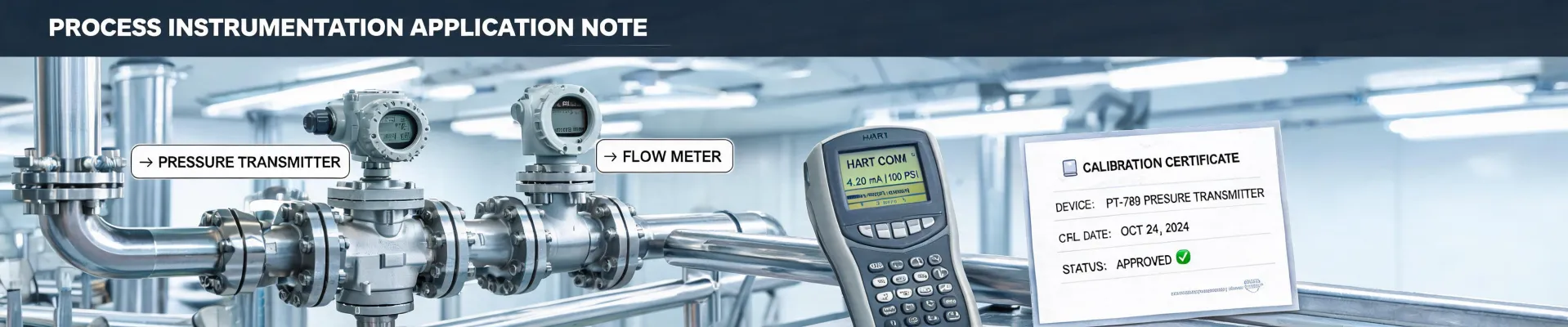
If you're choosing a pressure transmitter based on the Dwyer logo alone, you're doing it backwards. I've spent four years reviewing industrial measurement products before they ship, and I rejected roughly 7% of first deliverables in 2024 because they didn't match the stated spec. A logo is a signal, not a specification. The brand tells you a manufacturer has a reputation to protect; it doesn't tell you whether the unit in your hand was calibrated correctly. Put another way: the logo is an introduction, not a proof.
Who Am I to Say This?
I'm a quality and brand compliance manager at an industrial instrumentation distributor. I review every deliverable before it reaches customers—roughly 200 unique items a year, including pressure transmitters, flow sensors, air velocity monitors, and even lab plastics. In Q1 2024, our internal audit found that 11% of incoming products with recognizable brand labels had a documentation issue: missing calibration certs, expired dates, or serial numbers that didn't match the packing list.
When I first started in this role, I assumed name-brand products were always safer. The logic was simple: large manufacturers have more to lose. Three borderline failures later, I realized the issue wasn't brand vs no-name. It was evidence vs assumption.
I still kick myself for accepting a calibration certificate at face value back in 2022. The date had expired, and we shipped a sensor that was out of spec. If I'd checked the date on the cert, we'd have caught it before the customer did. That lesson shaped how I review everything now.
The Dwyer Logo Gets You Only So Far
I like Dwyer as much as the next instrumentation person. Their Magnehelic differential pressure gauges are on plant walls all over the world for a reason. But I don't approve a product because of the logo. A Dwyer logo on a flow sensor tells me someone ordered from a legitimate manufacturer. It doesn't tell me whether the sensor was handled correctly in shipping, stored in a hot warehouse for nine months, or accidentally configured with the wrong range at the factory. I've seen all three.
A logo is a signal, not a specification.
A few years ago, a project engineer questioned why I was bench-testing a Dwyer flow sensor. His reasoning: "It's a Dwyer." Fair enough. But when I ran that same Dwyer flow sensor at mid-range against our NIST-traceable reference, it read 6% low. That was outside the spec we'd agreed on. One unit doesn't condemn a brand; it validates a process. We didn't ban Dwyer. We just made verification non-negotiable.
Pressure Transmitters Are Not Immune
The same logic applies to pressure transmitters. We once received a batch of them from a well-known manufacturer (not Dwyer). The logo was crisp, the paperwork was complete, and the transmitters looked right. But when we tested them, the zero output read 4.6 mA instead of 4.0 mA. That's 0.6 mA off at zero. The supplier claimed it was 'within manufacturing tolerance.' It wasn't; the datasheet said ±0.25% of span.
We rejected the batch—240 units, if I remember correctly, though I'm working from memory—and sent them back. The redo cost the supplier money and delayed our project by three weeks. Since I implemented our incoming verification protocol in 2022, warranty returns related to calibration issues have dropped by 34%. That's not magic. It's just refusing to let the brand label replace a reference reading.
Megger vs Multimeter: The Right Tool for the Right Question
The megger vs multimeter question is another place where the label gets confused with the function. A multimeter is a general-purpose tool. A megger—short for insulation resistance tester—is a specialist. You wouldn't use a multimeter to check the insulation on a motor winding, because most multimeters don't apply enough voltage to stress the insulation.
The principle is straightforward: a megger applies a high DC voltage, usually 500 V or 1,000 V, and measures the resulting resistance. Under the safety standard IEC 61010-1, the test equipment has to be rated for the environment it's used in. So when I audit a contractor's tool kit, I don't just ask, "Do you have a multimeter?" I ask how they plan to verify insulation. If the answer is "a multimeter with a resistance range," that's a red flag. Put another way, a megger answers a question a multimeter was never designed to ask.
Even 50 ml Centrifuge Tubes Need Evidence
If you think this is only about expensive electronics, consider 50 ml centrifuge tubes. They cost cents, but a bad lot can ruin a week of lab work. I once ran a quick performance check on a name-brand tube and a budget tube. The budget tube deformed at 8,000 xg; the name-brand tube held. Then I tested a second lot of the name-brand tube, and it failed too. The only way to know is to check the lot-specific QC certificate or run a test. Brand is not a substitute for batch-specific data.
How the Industry Is Changing
I've been in quality long enough to watch best practices evolve. In 2020, a paper calibration certificate from the manufacturer was generally accepted. By 2025, I want a digital record with the serial number, the calibration date, the test points, and the measured values. The fundamentals haven't changed—you still have to compare a device against a reference standard—but the execution has. Old habits like trusting a logo because "they've been around for decades" don't hold up when supply chains are longer and data is easier to fake.
At least, that's been my experience with instrumentation suppliers and incoming audits. If your company works in a lower-stakes environment, maybe you need less. But the direction is clear: evidence beats reputation.
Honest Boundaries
Let me be fair to the logo. There are cases where it's a reasonable shortcut. If you're hanging a Dwyer Magnehelic in a hospital to give a visual indication of room pressure, a quick zero check may be enough. That gauge isn't a calibrated transmitter driving a control loop. But if that reading feeds an alarm or a validation report, it needs the same verification as anything else.
I'm not saying every Dwyer product needs a full calibration before use. I'm saying no manufacturer ships 100% perfect units. I'm also saying the cost of checking is tiny compared to the cost of a bad measurement. The most frustrating part of this work is that the same issues keep appearing despite clear specs. You'd think written procedures would prevent confusion, but interpretation varies.
So when you pick a pressure transmitter, a Dwyer flow sensor, or even a box of 50 ml centrifuge tubes, don't let the logo do the thinking. Read the spec, check the documentation, and test what matters. The logo is a useful signal. It's just not the whole story.