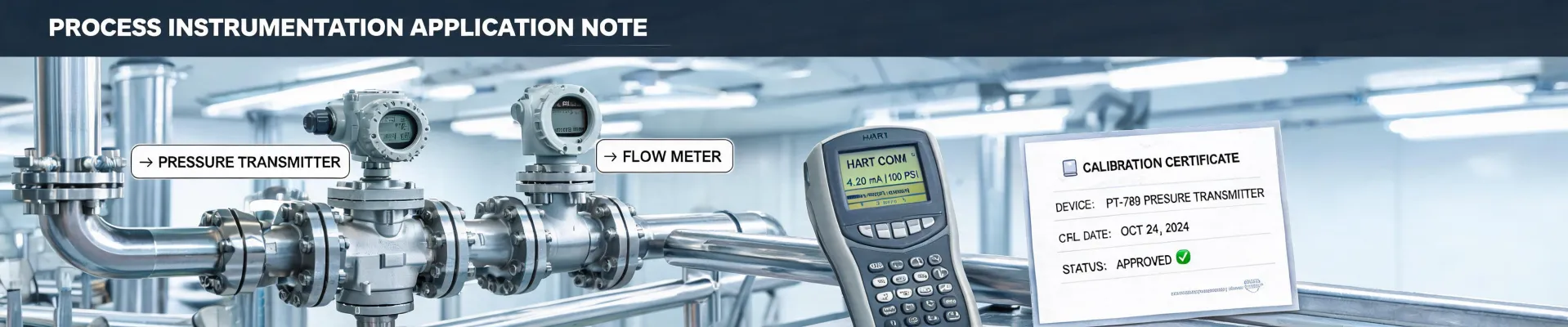
I'm going to say something that might get me kicked out of the purchasing group chat: the cheapest pressure transmitter quote is almost never the cheapest option.
Sounds contradictory, I know. But stick with me—I've got the spreadsheets to back it up.
I manage instrumentation buying for a 90-person industrial control company. That's roughly $400,000 a year in orders, spread across twelve vendors, and I report to both operations and finance. Operations wants reliability. Finance wants savings. I'm caught in the middle, which means I routinely have to tell both sides things they don't want to hear.
I've been doing this since 2020, and my first two years in the role, I was the biggest sucker for a low quote you'd ever meet. "Price is price," I told myself. A transmitter is a transmitter. Same measuring ranges, same output signal, same electrical connections—what could possibly justify paying 30% more?
Turns out, quite a lot.
The Incident That Changed My Approach
In 2022, I ordered eight pressure transmitters from a supplier who undercut the product we usually bought by nearly 30%. The units looked fine on paper. Same ranges, same 4-20 mA output, same threads. But within twelve months, three of those eight failed completely. Two more drifted out of calibration—far enough out that a customer's building management system started throwing alarms at random hours of the night.
One of those failures happened on a Saturday. We had to pull a technician out of a family event to diagnose why a rooftop unit was reporting erratic pressure readings. That one emergency call, including overtime and the service fee, cost more than the price difference between all eight budget transmitters and the dwyer pressure transmitters we normally ordered.
When I finally totaled everything—replacement units, service time, downtime, troubleshooting labor, rush shipping—the budget transmitters had cost us about 40% more than if we'd just gone with dwyer from the start. The so-called savings were never savings at all; they just moved into other line items. I sat at my desk staring at the spreadsheet, thinking: I just lost six months of credibility with our CFO in exchange for a "savings" that wasn't real.
The Quiet Cost of Verification
Here's something most buyers never consider when comparing quotes: the cost of verification. Cheap instruments don't earn trust. Your techs double-check every reading. They bring extra gear. They spend extra time. And that labor never appears on a purchase order. According to the International Society of Automation (isa.org), regular verification of process instruments is fundamental to measurement integrity—but if you purchase reliable instruments, you spend less time verifying and more time doing actual work.
Our senior technician started carrying a 289 True RMS multimeter to every job site after the incident. Partly to check those questionable 4-20 mA loop signals, partly because the budget transmitters were sometimes noisy, sometimes a full percent or two off. The 289 is a solid tool—its logging function alone has saved us during intermittent faults. But when you're using it to verify brand-new transmitters that should be in-spec straight out of the box, you're burning labor hours nobody budgeted for.
The same pattern showed up with temperature sensors. The cheapest sensors we trialed had response times that wandered from their datasheet values, and drift was a constant problem. Our technicians were recalibrating on every maintenance visit. The dwyer temperature sensors we'd used before were boringly consistent. And in this industry, boringly consistent is the highest compliment you can pay a component.
The Standardization Factor
There's another cost I didn't see until our 2024 vendor consolidation project: the friction of managing too many brands.
Before we consolidated, we were juggling eight different instrument manufacturers. Eight sets of manuals, eight tech support lines, eight slightly different operating quirks. One of our mechanics literally Googled how to turn off Mitutoyo digital micrometer because nobody could find the manual and the button sequence is not exactly intuitive.
That's a tiny example, but it's the kind of friction that accumulates across dozens of devices and thousands of maintenance hours. Meanwhile, dwyer covers nearly everything we install: pressure transmitters, differential pressure transmitters, temperature sensors, humidity sensors, level transmitters, air velocity sensors, even the classic Magnehelic differential pressure gauge that shows up on filter applications everywhere. One catalog. One tech support relationship. One set of operating principles that our whole team can learn.
Standardizing on dwyer also shrank our spare-parts inventory. We no longer stock five different brands of pressure sensors for five different installs. The inventory line item alone was a visible improvement. And for the field team, onboarding is simpler—new techs only need to learn one brand's conventions instead of eight.
The Price Objection, Answered
Now let me deal with the obvious pushback: "But dwyer costs more upfront." Yes. Sometimes it does. I'm not going to pretend otherwise. And to be fair, there are situations where a budget transmitter makes sense. A non-critical tank level readout that gets checked once a week? Fine. Save the money. I get it—I've made that argument myself when the project budget was tight.
But what I ask people to do is run the lifecycle numbers. Include the cost of failures. The labor cost of verification. The cost of downtime, callback visits, and extra vendor management. When I did it for our own facility, the dwyer differential pressure transmitter on our air-handler filter banks has been running for four years without a single calibration complaint. I want to say the three-year TCO difference was around 25-30% in dwyer's favor, but don't quote me on the exact figure—it varies by application. The direction, though, was unmistakable.
If you want a quick framework, here's what I use. Start with the unit price. Then add expected calibration cost per year, expected failure rate over three years, cost per failure in labor and downtime, and the administrative cost of supporting an extra brand. Drop those into a simple spreadsheet and compare. The answer usually surprises people.
What I'd Tell Another Buyer
The question everyone asks when comparing instrument suppliers is, "What's your best price?" The question they should be asking is, "What does it cost when this fails?"
I'm not saying you should always buy the most expensive option. That's just as lazy as buying the cheapest one. What I'm saying is that a quote is a starting point, not a final answer. Calculate the full cost of ownership before you sign anything.
And if you're a buyer reading this, I think the hardest skill to learn is the difference between "cheap" and "economical." They sound similar. They are not the same.
I should also add the usual caveat: this is all based on my experience as of early 2025. The instrument market changes quickly. Product lines evolve, prices shift, and new entrants appear. So verify current specs and quotes before you commit.
But the TCO principle? That doesn't change. Because the cheapest transmitter isn't the one with the lowest price tag. It's the one that does its job without making you think about it. For us, that's been dwyer.