Sticker price is the least important number on a purchase order.
I manage procurement for a 140-person industrial services company. Our instrumentation and test equipment budget runs about $180,000 a year, and I've tracked every invoice since 2019. That's six years of watching people make the same mistake: picking the cheapest quote and calling it a win.
I'm done with that. In my opinion, the only honest way to compare test equipment and process instrumentation is total cost of ownership. TCO includes the purchase price, yes. But it also includes setup, training, calibration, downtime, and the cost of being wrong. If you're not calculating that, you're not doing procurement. You're gambling.
The Price Trap
Test equipment is one of the easiest categories to mis-buy. There are thousands of listings, dozens of review sites, and a price range from 'suspiciously cheap' to 'why would anyone pay that.' The problem is that the price is the only number most of us see clearly.
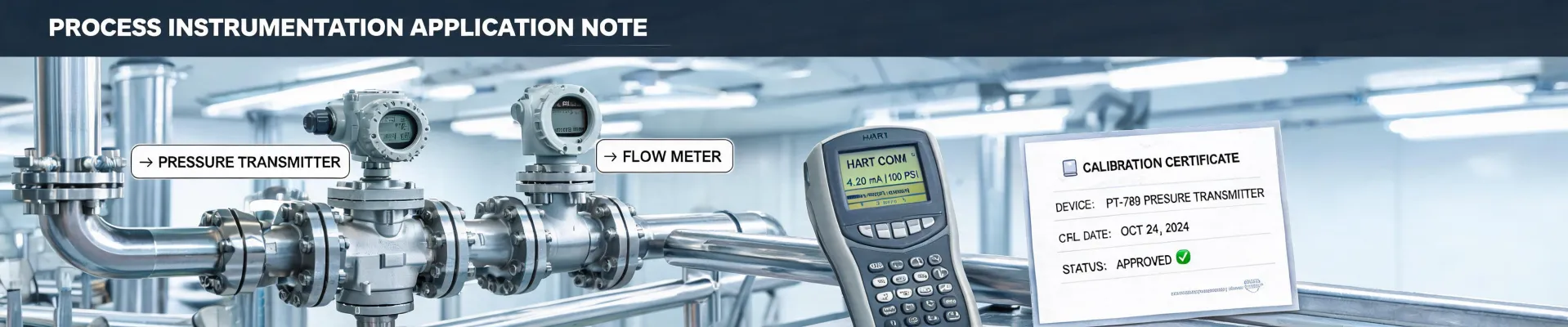
Take the Dwyer IEF-SN-PG-CCE-LCD flow transmitter price we quoted in Q3 2024. On paper, one distributor was 18% cheaper than the next. The cheap quote did not include the LCD configuration service. We would have had to configure it in-house. If that sounds small, let me tell you: a configuration mistake on a flow transmitter can cost a full day of labor and a recalibration fee. The cheap quote was not cheap. It was a project.
Same story with a Dwyer differential pressure analog gauge. It's a simple instrument, and the price is hard to justify on paper when a digital version costs a little more. But in the right application, the analog gauge has no battery, no menu, no firmware update, and no screen to crack. Its total cost over five years is lower than the digital option because it never asks for anything. The price was low, and the TCO was even lower.
I have a file folder labeled 'surprises.' It has quotes where the 'free' setup required $450 of paid modifications. It has invoices where rush freight cost more than the part. It has one note from a vendor who upsold us on a warranty that duplicated the manufacturer's coverage. Every one of those surprises went into the TCO spreadsheet.
Where Review Sites Miss the Point
Last year, I read a stack of 115 rms digital multimeter reviews while researching meters for our technicians. Most of those reviews talked about accuracy, durability, and backlight brightness. I filtered for calibration interval and warranty turnaround instead. That one decision saved us about $600 in recalibration fees over the first year, because the meter we chose had a two-year calibration cycle instead of one year. The review sites never mentioned that. They were staring at the wrong number.
Calibration is a recurring cost that changes the calculation. A $300 meter with a one-year calibration interval costs more over three years than a $500 meter with a two-year interval, assuming the calibration fee runs about $100 each time. That's not a hypothetical. That's the exact math I ran.
Thermal Cameras Are a TCO Lesson
Another example: our building services team asked for a FLIR thermal camera. I'm not a thermography expert, so I can't tell you how to interpret every thermal pattern. But from a procurement perspective, I know that the camera is the cheap part. The training is the expensive part. Knowing how to use FLIR thermal camera settings correctly—emissivity, reflected temperature, distance-to-spot ratio—turns a $3,000 tool into a diagnostic instrument.
The most useful tip I've picked up is to set emissivity before you aim the camera. For a motor with electrical tape, 0.95 is a reasonable starting point. For a shiny metal busbar, emissivity can be 0.1 or lower. If you get that wrong, the temperature reading is fiction. A contact thermometer as a reference probe is a cheap way to sanity-check the image. That's a TCO move: it makes the expensive tool useful.
We budgeted for a two-day course, a reference probe, and time to practice on known faults. The camera paid for itself in the first quarter by catching a failing busbar before it became an emergency. The purchase price was irrelevant next to the cost of an unplanned outage.
That's not just my opinion, either. Per FTC guidelines (ftc.gov), claims based on thermal images need proper substantiation. If you're going to tell a client their roof is wet or their motor is overheating, you need to be able to defend the method. A camera you don't know how to use does not produce defensible data.
What TCO Actually Looks Like
Here is the list I use for every purchase over $200. It's not perfect, but it has caught more hidden costs than it has missed.
- Purchase price and freight
- Setup, configuration, and commissioning labor
- Training and documentation
- Calibration intervals and verification fees
- Expected failure rate and repair turnaround
- Cost of downtime if the device is wrong
Use that list on a cheap quote and an expensive quote and you will be surprised. The surprise is not always that the expensive option wins. Sometimes it's that the cheap option is actually fine. But you don't know until you run the numbers.
I also changed how I talk to vendors. I don't ask for their best price. I ask for their best total cost quote: include freight, lead time, calibration certificate, and return policy in the number. The vendors who answer that question seriously are the ones I keep on the approved list.
What I Learned From a $1,200 Mistake
I learned this the hard way. In 2021, I skipped the final calibration check on a batch of pressure transmitters because the vendor had never let us down. I thought, 'what are the odds?' Well, the odds caught up with me. A third of the batch arrived without documentation. We quarantined everything, sent units out for verification, and reworked a week of logs. It cost about $1,200 and a lot of credibility. The 'never mattered' step mattered exactly once, and that was enough.
Now our procurement policy requires quotes from at least three vendors. But I don't compare those quotes side by side on price. I compare them after adding the TCO columns. That policy came directly from the transmitter quote I mentioned earlier.
But What About Budget Limits?
I hear the objection: 'We don't have the budget for the higher price.' I get it. I used to make the same argument. But after tracking 300+ orders over six years, I found that most of our budget overruns came from emergency replacement and expedited freight, not from buying quality equipment in the first place. The expensive option that arrives on time and works is cheap compared to the cheap option that fails on a Tuesday.
This does not mean you should buy the premium version of everything. It means you should buy the version whose total cost fits your application. Sometimes that's a $75 analog gauge. Sometimes it's a calibrated flow transmitter with a two-week lead time. The price is a starting point, not a conclusion.
My Bottom Line
If you ask me, the best procurement decision you can make is to stop staring at the unit price and start staring at the whole cost picture. Test equipment, Dwyer instrumentation, multimeters, thermal cameras—they all follow the same rule. The sticker price is the least important number on the purchase order.
There's something satisfying about running a purchase order without a fire drill. After six years of spreadsheets, a few expensive mistakes, and one very embarrassing batch of transmitters, that's the payoff. The numbers work. And they work better than relying on the price list. I do not mean every purchase goes perfectly. But I do mean you can catch most of the hidden costs before they catch you.