-
The mistake that made me a checklist believer
-
Dwyer sensors: start from the Dwyer Home page, not from memory
-
Flow meter Prowirl 200: a proven meter, but installation decides
-
FLIR vs Fluke thermal camera: my honest answer
-
Prevention over cure: the three-point verification protocol
-
Where the datasheet approach has limits
Over the last four years, I have quality-reviewed roughly 200 unique instrument lines per year, which is more than 800 orders. I rejected about 12% of first deliveries. Almost every rejection came down to the same thing: the brand was right, but the specification was wrong. So here is the conclusion first: Before you buy a Dwyer sensor, a Prowirl 200 flow meter, or a thermal camera for iPhone, check the datasheet against your actual application. Five minutes of verification beats five days of correction.
This article covers three areas where I see the same mistake repeating: process instrumentation from Dwyer, vortex flow metering with the Prowirl 200, and the FLIR vs Fluke thermal camera decision. My goal is to help you avoid the expensive rework that comes from trusting a name instead of a part number.
The mistake that made me a checklist believer
I only believed in verification after ignoring it. In Q1 2024, we approved a rush order for 50,000 sensors with the right brand and the wrong output signal. Our control system needed 4-20 mA. The sensor's factory default was 0-10 V. The vendor's confirmation looked fine if you read the model number but not the configuration options. Because of the deadline, we skipped the sample check.
We rejected the whole batch. That quality issue cost us a $22,000 redo and delayed our launch by three weeks. Now every contract includes a 'verify before ship' clause. The vendor was not the villain; the process was. The defect was preventable, and prevention is cheaper than correction.
Dwyer sensors: start from the Dwyer Home page, not from memory
If someone searches for 'dwyer home,' they often land on the Dwyer Instruments homepage and see a broad industrial catalog. That is not a consumer smart-home brand. Dwyer is a well-known supplier of process and HVAC instrumentation, and their product range is a reason their sensors show up in panels all over the world.
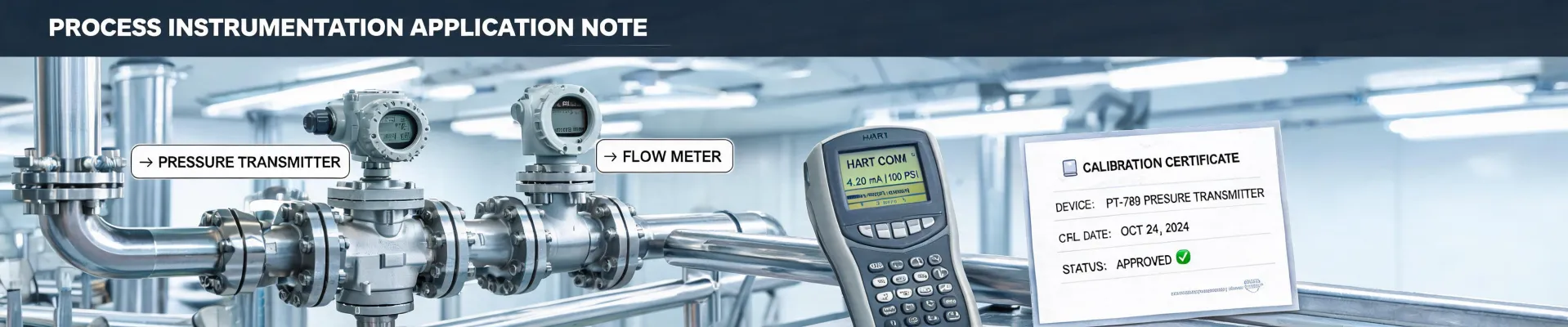
Dwyer sensors cover pressure, flow, level, temperature, humidity, and air velocity. The Magnehelic differential pressure gauge is a staple. But 'Dwyer' is not a specification. The most common error in our audits is choosing the right product family but the wrong version. For a Dwyer sensor, verify the output signal type, pressure range, process connection, wetted material, accuracy, and ambient temperature limits. If those items are not on your purchase order, you have not finished selecting.
I once ran a blind test with our team: two Dwyer sensors that looked identical but had different pressure ranges. Four out of five engineers picked the wrong one as 'more professional' based only on the packaging. That is how easily appearance replaces verification.
Another reason Dwyer sensors get specified is the breadth of accessories and documentation. But breadth is also a trap. The larger the catalog, the easier it is to grab a similar-looking model number under pressure.
Flow meter Prowirl 200: a proven meter, but installation decides
The Prowirl 200 from Endress+Hauser is a serious vortex flow meter. It is designed for liquids, gases, and steam, and it has earned a good reputation in process applications. But a flow meter that is perfectly selected on paper can still measure poorly if the piping does not satisfy the vortex principle's basic requirements.
We had a Prowirl 200 on a saturated steam line where the meter size looked correct in our calculations. What we missed was the straight-run requirement in the installation manual. The result was unstable readings and three days of troubleshooting. The meter was fine; the installation was wrong. That is a verification failure, not a product failure.
If you specify a Prowirl 200, plan for the pipe layout, the minimum flow, and the commissioning check. A vortex meter is not a plug-and-play device. It works extremely well when the process conditions match the design assumptions.
The best way to avoid this failure is to involve someone who has commissioned vortex meters before. A second pair of eyes on the pipe layout is cheap compared to a three-day shutdown.
FLIR vs Fluke thermal camera: my honest answer
If the application is specifically a thermal camera for iPhone, my answer is fairly direct: choose FLIR. As of January 2025, FLIR's One series is the phone-attached thermal imager I would recommend. Fluke makes excellent handheld thermal cameras, but their lineup is built around standalone industrial tools, not an iPhone attachment.
That does not make Fluke a bad brand. For high-accuracy process work, Fluke is probably the stronger choice. Their handheld units are designed for field reliability and traceable temperature readings. FLIR wins on portability and price; Fluke wins on ruggedness and repeatability for serious maintenance programs.
In practice, we bought both. The data said FLIR would save money and cover most inspection tasks. My gut said we still needed a Fluke-grade instrument for critical bearings and electrical connections. Both were right. If you need a quick look at a breaker panel or an insulation gap, FLIR is enough. If you need trending data on a critical pump bearing, budget for a Fluke handheld and a defined inspection route.
One more thing: if you plan to share thermal images in reports, check the software workflow before you buy. FLIR and Fluke both offer desktop and mobile tools, but your team will have a preference. We chose based on which report template worked better in the field.
Per FTC guidance (ftc.gov), comparison claims need substantiation. I cannot make a blanket statement that one brand is universally better. The decision depends on your workflow, your accuracy requirements, and whether the camera needs to fit in a pocket.
Prevention over cure: the three-point verification protocol
After the 2024 redo, I implemented a three-point verification protocol for every supplied instrument. The results were immediate: first-pass acceptance in Q3 2024 improved by 27% compared to the same period in 2023. The protocol is simple:
- Compare the purchase order against the supplier's confirmation, including every option and default setting.
- Compare the supplier's datasheet against the application requirement: output signal, range, connection, accuracy, and environmental limits.
- Physically inspect a sample unit before signing off on the full lot.
The protocol does not add a lot of time. On an average order, the full check takes under an hour. On a 50,000-unit order, that hour is the best investment you can make.
That is the cheapest insurance in instrumentation (note to self: I still need to formalize this for our cabinet-level procurement).
Where the datasheet approach has limits
To be fair, verification has limits. Some problems only appear after installation, thermal cycling, or interaction with other equipment. A datasheet tells you the safe operating range; it does not tell you how a specific sensor will behave on your specific process line. That is why you keep engineering margin and why a small pilot run is sometimes the smartest test.
Also, do not use 'verify' as an excuse to over-specify. The goal is to confirm the minimum requirements, not to buy the most expensive version of everything. I have rejected more orders for 'too much instrument' than for the wrong brand. That is a different kind of cost, but it is still a cost.
If you are buying for a one-off project, don't let this article talk you into a huge process. A two-line confirmation matching model number to application is often enough.
No brand—Dwyer, Prowirl 200, FLIR, Fluke, or anyone else—removes the need for verification. That is not a criticism of those brands. It is just how quality works. Brands matter, but fit matters more.