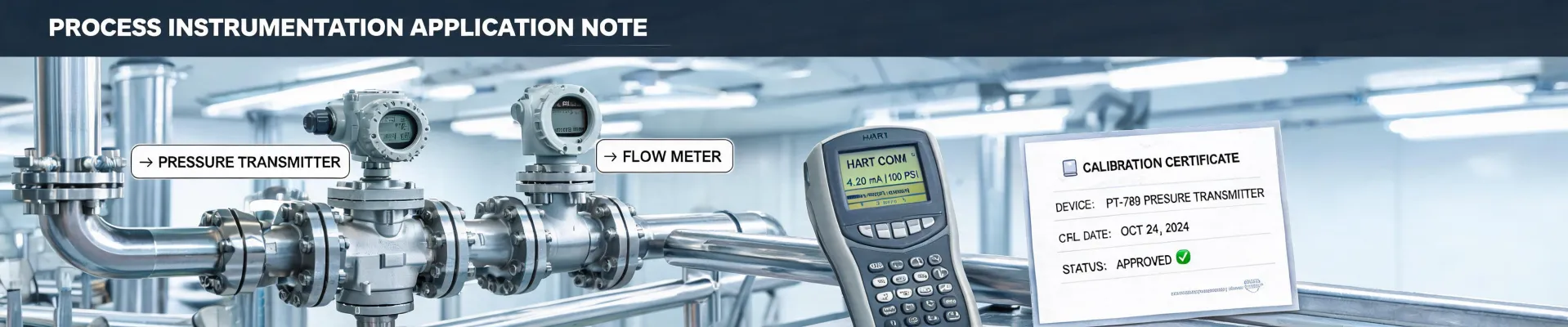
If you've ever had a process line go down and needed instrumentation shipped yesterday, you know that feeling. In my role coordinating instrumentation for small and mid-sized plants, I've handled more rush orders than I can count—maybe 180, I'd have to check the system. And the one thing that keeps me up at night isn't the price of a Dwyer Minihelic II differential pressure gage or a Dwyer IEF flow transmitter. It's whether the part I'm expediting will actually work the first time.
This article is a comparison, but not the usual brand X vs brand Y. It's about two ways to approach an urgent instrumentation buy: grab whatever ships fastest vs get the right part, then make it ship fast. After a few expensive lessons, I know which one I trust.
The comparison framework
When you need a replacement sensor or transmitter under deadline, every decision becomes a trade-off. Here are the dimensions I use:
- Quoted price vs total installed cost
- Analog mechanical vs digital smart technology
- Catalogue specs vs real application constraints
- How much you can verify before accepting a shipment
The goal here is not to paint one side as evil. It's to show where the hidden costs live. Trust me on this one—the cheapest quote has cost us more in 60% of cases. I don't have a perfect spreadsheet, but I remember the failures.
Dimension 1: Price vs total cost
Let's talk about the Dwyer IEF flow transmitter price. It's not the lowest-priced thermal flow switch on the market. If you only compare list numbers, you can find discount units for 30-40% less. In March 2024, a client called at 4 pm needing an IEF for a 6 am start-up. Normal lead time from the distributor was five days. We found an authorized source with one in stock, paid a $180 expediting fee on top of the $450 base, and had it delivered by 10 pm. That sounds like a lot until you do the math: the delayed start would have cost the client $6,000 an hour.
People assume that expensive vendors deliver better quality. Actually, the causation runs the other way: vendors who deliver quality can charge more. Cheap replacement parts have a way of failing at 2 am. We paid $800 extra in rush fees one quarter—or rather, $950 once I counted the after-hours delivery—but we saved a client's $12,000 project.
My rule now: the lowest quoted price is just the start of the story. Add expedited shipping, emergency labor, and potential rework. Then compare total cost.
Dimension 2: Minihelic II vs digital transmitters
Here's where I have mixed feelings. The Dwyer Minihelic II differential pressure gage is a mechanical workhorse. It doesn't need power. It's easy to read from across the room. You can install it and forget it for years. For filter monitoring and cleanroom pressure checks, it's still my first choice.
On the other hand, the IEF flow transmitter gives you a 4-20 mA signal you can feed to a PLC or SCADA. You get trending, alarming, remote visibility. That's huge for a facility running unattended shifts. But digital also means you need to configure it, power it, and troubleshoot it. The first time we installed one, I didn't verify the wiring—actually, I did verify it, but I missed the range setting. Rookie mistake. We lost an afternoon to a swapped pressure tap.
If you want a simple local readout, the Minihelic II is hard to beat. If you need data in a control room, a transmitter is worth the extra cost. That's not a brand statement—it's an application decision.
Dimension 3: flow meter catalogue vs field reality
A flow meter catalogue shows you ranges, accuracy, and connection sizes. It does not tell you whether the flow meter you're eyeing will fit your existing pipe runs, whether the media is compatible with the wetted materials, or whether the turndown actually matches your min and max flow. I still kick myself for ordering a flow meter from a catalogue without checking the process connection. The brochure said it was standard. Turned out the installed tap was a different thread size. The rush fee I paid to get the right adapter? More than the adapter itself.
The 'buy from a catalogue because it's faster' thinking comes from an era when you had to call around to find specs. Today, online content can give you the same specs instantly. But you still need someone who knows how the instrument behaves in your system. I'd rather spend 15 minutes on the phone with an application engineer than order the wrong part twice.
What to check before you accept a rush shipment
Once the box arrives, don't assume. Here's what I do:
- Verify the model number and process connections before installation.
- Check the calibration tag against the range you specified.
- Whip out a phone thermal camera to inspect terminal blocks and nearby wiring for hot spots before power-up—it catches loose connections fast.
- For any motor or cable work, use the right tool. You can't test insulation with a thermal camera.
So how does a megger insulation tester work? It applies a high DC voltage—typically 500 V or 1,000 V—between a conductor and ground, then measures the leakage resistance. Good insulation shows megohms; wet or damaged cable shows low resistance. A phone thermal camera sees heat, but it won't tell you a single thing about insulation integrity. They're complementary, not interchangeable.
Which should you choose?
If you need a local pressure readout with no power dependency, choose the Minihelic II. If you need a 4-20 mA signal with monitoring, choose the IEF. If you're literally comparing costs, use total cost, not the invoice.
One more thing: build a relationship with an authorized distributor before you have an emergency. When I have to call in favors, it's because we've paid list price for years and we're honest about our spec. That goodwill takes time to build.
Prices mentioned here are from distributor quotes in 2024; verify current rates. But the lesson doesn't change: the right part the first time is almost always cheaper than a cheap part twice.