I'll start with an opinion that has caused more than a few debates: small orders don't deserve second-class treatment. Not because of sentiment. Because of simple business math. I review roughly 300 unique items every year as a quality and compliance manager, and the orders from customers who need one gauge or a handful of sensors get exactly the same scrutiny as the big ones. When I implemented our verification protocol in 2022, I insisted that every incoming lot, regardless of order size, goes through the same documentation check. In 2024, I rejected about 12% of first deliveries from new vendors due to documentation gaps alone.
Why I started taking small orders seriously
During our Q1 2024 quality audit, we received a small batch of thirty sensors from a vendor who wanted a pilot run. The specification required ±2% RH at 50% RH. Seven units read close to ±5% RH. The vendor said it was 'within industry standard.' It wasn't. We rejected the batch, and they redid it at their own cost. Now every contract includes explicit calibration acceptance criteria.
That decision wasn't easy. The upside was keeping our reputation intact. The risk was losing a week and creating friction with a vendor who wanted to grow with us. I kept asking myself: is one week worth shipping known-bad data? The expected value said the risk was low, but the downside felt catastrophic. That experience changed how I define 'good enough.'
Workhorse instruments I actually check first
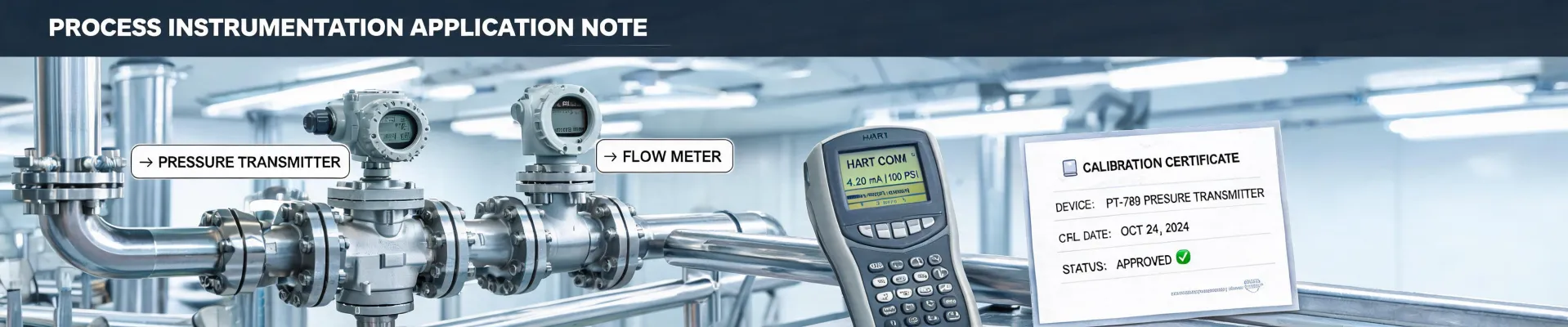
When I see 'pressure gauge dwyer' in a search query, I understand why. A Dwyer pressure gauge is one of the first things I recommend to contractors who need a reliable differential pressure reading. The Magnehelic is the obvious example. But a pressure gauge is only as trustworthy as its calibration history. Vibration, overpressure, and thermal cycling will drift even the best gauge. I look at the zero point every time, and if it needs calibration, ASME B40.100 gives us the tolerance bands.
The Dwyer humidity sensor in our controlled test chamber is another workhorse. I've tested the Dwyer humidity sensor against a chilled-mirror reference more times than I can count. It doesn't always win on absolute accuracy, but it does win on repeatability—and for a quality process, repeatability is often more valuable than a number on a data sheet. If a sensor is consistent, I can compensate. If it's random, I can't trust anything. Our reference instruments are calibrated by a lab that maintains NIST traceability, so I know the baseline is solid.
Voltage testers are not all the same
Another tool that often gets overlooked in quality discussions is the simple voltage tester. We use several voltage testers in our panel checks, and I have a personal bias toward the Klein 1AC II. If you've read any 1AC II non-contact voltage tester reviews, you already know the pattern: it's not fancy, it doesn't measure exact voltage, and it can't replace a multimeter. But what it does—detecting presence of live voltage without touching a conductor—is exactly what keeps inspectors safe.
As of January 2025, I still test every voltage tester before it goes in a maintenance bag. The 1AC II review comments I see online usually mention the same thing: it's predictable. That predictability matters more than a long spec sheet. A voltage tester that beeps inconsistently becomes an ignored warning device. The 1AC II earns its place because it's consistent.
Micrometers teach more than measurement
There's a skill I refuse to let disappear from our shop: reading a manual micrometer. If you're learning how to read a Starrett micrometer, the first rule is to ignore the digital display on the one next to it. A manual micrometer forces you to understand the reading from the sleeve and thimble. On a standard Starrett micrometer, each numbered graduation on the sleeve is 0.100 inch, each small line is 0.025 inch, and each thimble division is 0.001 inch. Match the thimble line with the sleeve reading, add the vernier scale if it has one, and you can resolve 0.0001 inch.
Why would a quality inspector care? Because when a small-order customer sends in a worn shaft and asks for a measurement, I don't want to hand them a number from a battery-powered tool with a dirty contact. I want to show them the physical evidence. Reading a micrometer is a respect move. It says this measurement is worth taking slowly.
Small customers are not small problems
Here's where the small-friendly stance comes in. I've been on both sides. When I was starting out, the vendors who took my $200 orders seriously are the ones I still use for $20,000 orders. That isn't nostalgia; it's trust compounding. A vendor that treats a one-off pressure gauge order as if it matters is a vendor that treats a 100-unit transmitter order as if it matters.
Honestly, I'm not sure why so many companies lose that standard when the order amount drops. My best guess is that large accounts get attention because they're visible, while small accounts get ignored because nobody is watching. But in quality, every shipment is visible to the person who receives it.
What I would say to a skeptic
You might argue: 'Not every small order can justify engineering time, calibration checks, or custom documentation.' I'd answer: you don't have to treat every order like a rocket launch. You do have to treat it like a professional obligation. There is a big difference between, 'we don't offer extended calibration' and 'you're not worth the paperwork.' The first is a capability limit. The second is an attitude problem.
I've never fully understood the pricing logic for small-order rush jobs either. The premiums vary so wildly between vendors that I suspect it's more art than science. But I do know that the moment a customer feels like a burden, they're gone. Not just from that order. Gone from your vendor list.
So, to the skeptical sales manager who sees a small order as a nuisance: check your assumptions. The person ordering one Dwyer humidity sensor today might be specifying a 50-sensor building automation system next year. The pressure gauge they buy now might be the one they trust with a process line later. And the easiest way to build that trust is to treat every order as if it's the one that will be audited.
I'd rather lose a small order today than lose a good customer tomorrow. That isn't a slogan. It's the result of spending four years watching what happens when quality is an afterthought.