-
Why you should trust this
-
What to specify when you need a Dwyer pressure transmitter fast
-
Dwyer differential pressure switch basics on a centrifuge
-
Why a sensors distributor can save you from yourself
-
On the durability of ifm photoelectric sensors vs others
-
What I would not do under deadline
-
Boundary conditions and honest limitations
If you need a Dwyer Instruments pressure transmitter or a Dwyer differential pressure switch for tomorrow, the cheapest online quote is not your best move. Your best move is to call a sensors distributor that has the part on the shelf and ask about the whole assembly, not just the part number. I have handled more than 50 rush orders in 7 years for plants that thought they had a sourcing problem. The ones that fail usually fail because of a missing fitting, a wrong wiring option, or a forgotten calibration certificate, not because of the instrument itself. When the window is short, the delivered solution is the only price that matters. Bottom line: the lowest invoice is a red flag, not a strategy.
I now calculate TCO before comparing vendor quotes. It wasn't always like that. After 3 failed rush orders with discount vendors, I changed the way I buy. The direct cost is the invoice. The total cost includes the part, freight, setup time, calibration verification, the chance of a wrong part, and the production loss while you wait. A $300 sensor that arrives in two days can cost $2,000 in downtime if you miss the window. A $420 sensor that arrives tomorrow, verified by a distributor, can be the best deal you ever signed.
Why you should trust this
In March 2024, a pharma plant called at 2:00 p.m. They needed a replacement Dwyer Instruments pressure transmitter for a centrifuge before a 6:00 a.m. startup. Normal delivery was three days. We found a distributor 40 miles away that had the unit in stock. We paid $120 in courier fees on top of the $580 base price and had it on-site by 10:00 p.m. The alternative was a 12-hour shutdown at roughly $8,000 an hour in lost production. That math is the whole argument.
That same month, a different plant asked for the cheapest transmitter we could source quickly. The quote was $90 lower, but it came from a reseller that didn't actually have inventory, so we waited three days, paid for expedited freight anyway, and the part arrived the morning after the maintenance window closed. Worse than expected. Not ideal, but workable only because the plant was already idle.
Granted, these are only two examples, not a scientific study. But they match the pattern in our internal records: the rush orders that kept a line running almost always came from a stocking distributor with local inventory, even when the unit price was higher.
What to specify when you need a Dwyer pressure transmitter fast
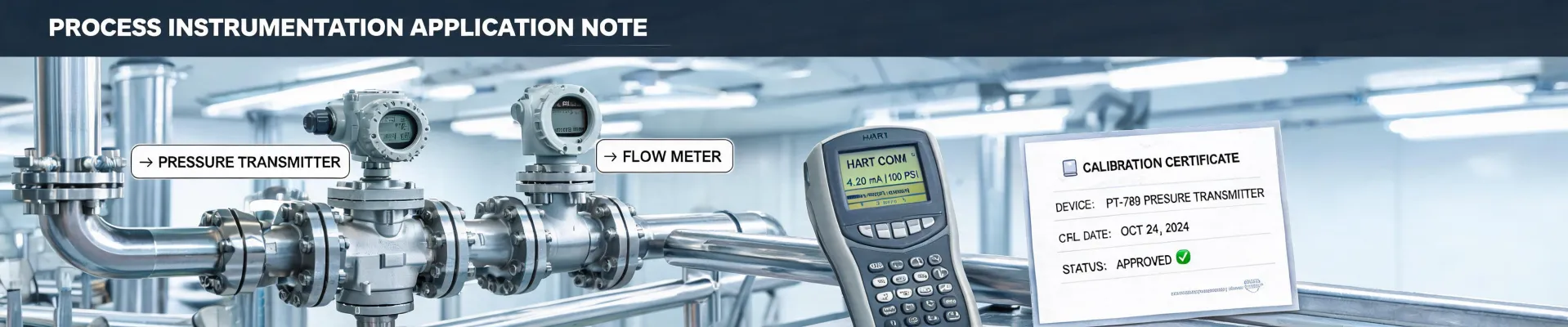
When someone says, 'I need a pressure transmitter,' the first question is not price. It's range, output, process connection, and electrical connection. A Dwyer Instruments pressure transmitter comes in different configurations, and the configuration matters more than the brand. If you order by model number only, you can end up with 4-20 mA instead of 0-10 VDC, or with a quarter-inch NPT process connection when your manifold is half-inch NPT.
Three things matter in a rush order: stock. spec. support. In that order. A distributor with a knowledgeable counter can catch mismatches before you pay for a rush. That's where good sensors distributors earn their margin.
Dwyer differential pressure switch basics on a centrifuge
A common application for a Dwyer differential pressure switch is monitoring a filter or a lube oil circuit on a centrifuge. The switch trips when the pressure difference across the filter reaches a set point, telling the operator that the filter is loading or the oil path is restricted. It is a simple, mechanical way to protect rotating equipment.
Here's what people miss: the switch is only one part of the loop. You need impulse tubing, isolation valves, and a proper set point. The five-minute conversation about accessories takes longer than the five-minute part order, but skipping it is how you end up with a switch that reads pressure on a bench but not in service.
I've never fully understood why some filter monitoring applications work fine with a switch and others need a transmitter instead. My best guess is that a switch is enough when you only need an alarm, but a transmitter is better when you want a trend. If someone has a deeper rule, I would love to hear it.
Why a sensors distributor can save you from yourself
If you've ever tried to explain to a plant manager why a sensor won't arrive until Tuesday, you know the sinking feeling. Most buyers focus on per-unit pricing and completely miss the true cost of a missed deadline. The question everyone asks is, 'What is your best price?' The question they should ask is, 'What do you have in stock and can you verify the configuration?'
To be fair, buying direct from a manufacturer has its place. But in an emergency, a distributor with local inventory is often the only realistic option. They can pull the part, check the label, take a photo, and ship it before the end of the day. That speed is not free, but it is cheap compared to the consequences.
On the durability of ifm photoelectric sensors vs others
A few months ago, someone asked me about the durability of ifm photoelectric sensors vs others. I'll be honest: I'm not 100% sure I can give a fair brand-level verdict, because I don't have enough field data on every model. To be fair, ifm photoelectric sensors are solidly built. I have seen them work well in dirty environments, and I have also seen them fail.
But in my experience, the durability of ifm photoelectric sensors vs others depends more on installation than on brand. Cable strain, mounting location, washdown chemistry, and vibration all affect sensor life. I once saw an ifm sensor fail in four months because it was mounted on a centrifuge door that slammed shut. I also saw a generic sensor last six years because it was enclosed and protected. The brand matters, but the application matters more.
So if you're choosing between photoelectric sensor brands, compare the housing material, the mounting options, the ingress protection rating, and the cable connection. And do not skip the spare part conversation. A sensor you can get tomorrow is worth more than a sensor you can get in ten days.
What I would not do under deadline
This approach is not a blank check. I would not pay a huge premium for a part that is not actually the right part. I also would not rely on a same-day delivery promise unless the distributor confirms the part is on their shelf, not at a warehouse across the country. A promise with no stock is just a guess.
Honestly, I'm not sure why some vendors consistently beat their quoted timelines while others consistently miss. My best guess is internal buffer practices. The vendor with a buffer builds in time for mistakes; the vendor without a buffer does not. So ask directly: 'Is this in stock, and what is your worst-case lead time?' Take this with a grain of salt: the best time to build a relationship with a sensors distributor is before you need them. If you only call when something is broken, you get the rush treatment, not the trusted-customer treatment. It costs nothing to send a quote request once a quarter or confirm a part number once a month.
Boundary conditions and honest limitations
Not every urgent order can be fixed with a phone call. If the equipment requires an explosion-proof rating, a specific SIL certification, or a custom range, no distributor can conjure a certified part overnight. Those orders need a different process, and the answer may be a temporary solution like a local gauge or a different monitoring method.
Also, if you're designing a new system with a three-month schedule, do not use the rush playbook. Use the time to compare options, verify compatibility, and test samples. Rush buying is a rescue tool, not a design strategy.
That's the honest boundary of my experience. I'm a coordinator, not a test lab. I have never tested every sensor under every condition, and I don't think anyone who sells sensors has either. But I have seen enough emergency orders to know this: the cheapest part is rarely the cheapest solution. A delivered, verified, installed sensor is the only sensor that matters.