I manage procurement for a mid-sized industrial company. Our annual budget for instruments, sensors, and lab supplies runs around $180,000. Maybe $175,000 now—I'd have to check last year's close. I've tracked every PO for the past six years. The cheapest option is rarely the cheapest, and the most expensive one is rarely necessary.
There's no universal buying rule. You have to know what you're optimizing for: uptime, compatibility, training, or just getting through the month. Here are the scenarios I see most often, and what I actually do in each.
Before anything else: verify the risk
The biggest trap in procurement is treating every order like a commodity. A flow sensor is not a pack of printer paper. A 15ml centrifuge tube that doesn't fit your rotor costs you a run. A micrometer that no one can read is a paperweight.
I learned this the hard way. In March 2023, a critical pressure line started reading nonsense. We pulled the transmitter, ordered a replacement, and it was the wrong electrical connection. The manufacturer's datasheet was right there—I just hadn't saved it. That $180 mistake cost us a day of downtime. A lesson learned the hard way.
Scenario 1: Replacing a Dwyer pressure transmitter or Magnehelic gauge
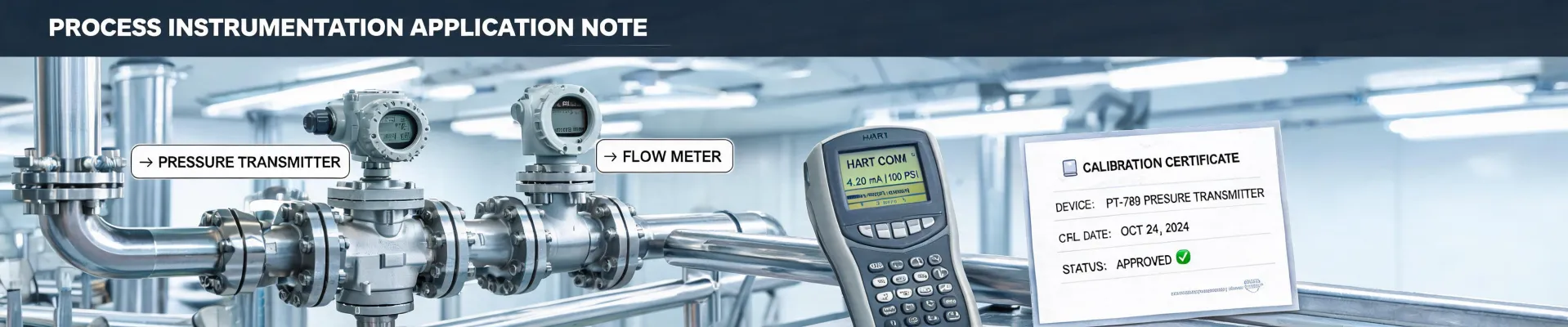
If you already have a Dwyer dp transmitter in the loop, resist the urge to upgrade based on price. The goal is a drop-in replacement. Start with the model number stamped on the side. Then check four things: range, output (4-20 mA vs voltage), pressure connection, and the wetted material.
The first thing I search for is dwyer magnehelic differential pressure gauge pdf. The PDF datasheet shows the model breakdown, standard ranges, and mounting instructions. I've caught two possible wrong orders just by reading the dimensions section. Oh, and download the PDF and put it in your maintenance folder. That habit has saved me more than once.
If you're not sure about the model, don't guess. Call the manufacturer or talk to a distributor who actually has spec sheets. A ten-minute call is cheaper than a rushed order. I once approved a substitute DP transmitter to save $150. The mounting holes were 2 mm off. The re-install cost $1,200.
5 minutes of verification beats 5 days of correction.
Scenario 2: Choosing flow sensors for a new line
This is the scenario where conventional wisdom fails. Everything I'd read said you should always buy the name-brand premium option. In practice, for new installations where you control the piping and the output, a mid-tier flow sensor can be perfectly fine—if the specs line up.
Compare repeatability, pressure drop, temperature range, and wetted materials. Not just the list price. Per FTC guidelines (ftc.gov), advertising claims have to be truthful and substantiated. But a substantiated claim is only a starting point. If a datasheet doesn't list repeatability, that's a red flag.
There is one exception: if your team already uses Dwyer flow sensors elsewhere, standardizing is worth real money. Fewer spares, familiar wiring, and you already have the manual. The lowest quoted price often isn't the lowest total cost.
What happens if the sensor fails? For critical loops, buy the solution with a proven track record. For non-critical monitoring, a workable sensor beats a perfect one that sits on the shelf.
Scenario 3: Buying 15ml centrifuge tubes for a lab
This is the order we tend to overthink. 15ml centrifuge tubes are low-value and high-annoyance. The mistake I made in my first year was choosing by price alone. The tubes came in, the volume was right, but they didn't fit the rotor. We found out during a scheduled run. That $80 savings on a case caused a $400 delay and a very unhappy lab manager.
Now I check four things before ordering: sterile or not, cap style (screw vs snap), dimensions, and the g-force rating. For routine mixing, generic is fine. For long-term storage or high-speed spins, use a known brand. That's not being snobby; that's compatibility.
The conventional wisdom is to buy the cheapest consumables and move on. My experience with hundreds of orders: consistency matters more than nickels. Once you find a tube that works, stay with it. Simple.
Scenario 4: Learning to read a Starrett micrometer
A micrometer only helps if someone can read it. This sounds obvious, but I've seen it fail. We bought a nice used Starrett set because it was a deal. No one in the shop knew how to read it. It sat in a drawer for two months until I scheduled a training session. After that, it became one of the most used tools on the bench.
Learning how to read a Starrett micrometer is not hard. Look at the sleeve first: each number is 0.100 inch, each small line is 0.025 inch. Then look at the thimble: each division is 0.001 inch. If it has a vernier scale, use the line on the sleeve that lines up with a thimble line to read 0.0001 inch. That's it.
Buy the tool and the training in the same purchase. Check the calibration with a standard before critical measurements.
5 minutes of verification beats 5 days of correction.
How to tell which scenario you're in
Ask yourself three questions.
- Is this a replacement in an existing system? If yes, the original datasheet and model number matter more than any sales pitch. For Dwyer dp transmitters and Magnehelic gauges, start with the PDF manual.
- Is the problem a new process or a new capability? If yes, compare total cost of ownership: specs, training, spares, and support. For flow sensors, a slightly more expensive unit with known wiring can be cheaper than a bargain that needs adapters.
- What is the cost of being wrong? For 15ml centrifuge tubes, it's a lost run and some embarrassment. For pressure transmitters, it could be downtime and safety concerns. That cost determines how much verification you need.
If you're still not sure, default to the heavier verification. Download the datasheet, read the micrometer instructions, test the tube in the rotor. The right product—put another way, the right spec, not necessarily the highest price.
The pattern after six years of buying this stuff: the cheapest path is the one that gets it right the first time. Before you order, spend 5 minutes on a checklist. That's the highest-ROI habit I have.