-
What should I check before ordering a Dwyer indicating flow meter or pressure sensor?
-
Are Dwyer indicating flow meters the same as digital flow meters?
-
What does 'real thermometer high fever' mean for industrial buyers?
-
What is the best Fluke multimeter for electricians?
-
How do I buy a pipette gun without wasting money?
-
Which instruments actually need calibration certificates?
-
Should I buy every instrument from one vendor?
If you're responsible for ordering measurement instruments, you've probably typed 'dwyer' into a search bar at least once. This FAQ is built from mistakes I've made so you don't have to repeat them. I've spent nine years handling instrument orders for a food processing plant and an HVAC controls shop. I've personally made—and documented—14 significant ordering mistakes, totaling roughly $21,000 in wasted budget. Now I maintain the pre-order checklist that has caught 47 potential errors in the past 18 months.
Here are the questions I wish someone had answered before all that waste:
- What should I check before ordering a Dwyer indicating flow meter or pressure sensor?
- Are Dwyer indicating flow meters the same as digital flow meters?
- What does 'real thermometer high fever' mean for industrial buyers?
- What is the best Fluke multimeter for electricians?
- How do I buy a pipette gun without wasting money?
- Which instruments actually need calibration certificates?
- Should I buy every instrument from one vendor?
What should I check before ordering a Dwyer indicating flow meter or pressure sensor?
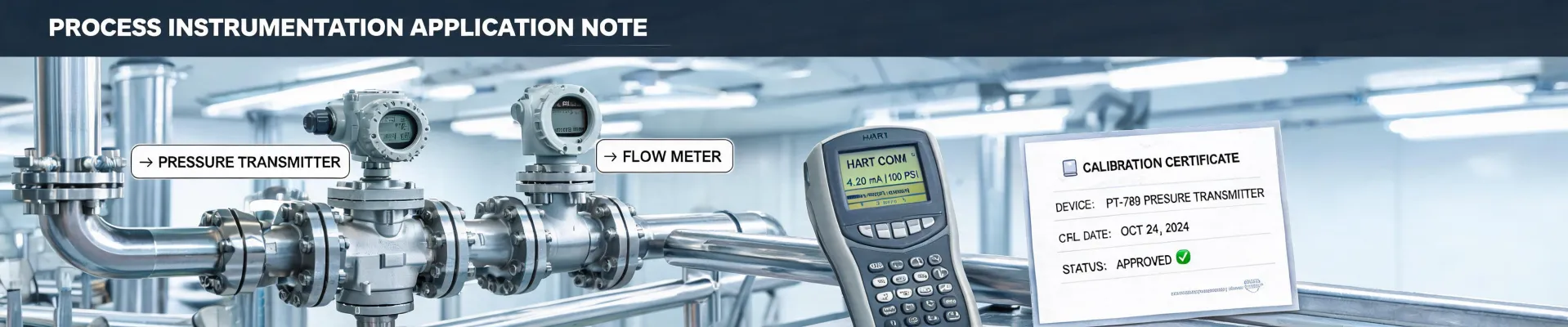
The first mistake I made—the classic mistake—was checking the price and the range but not the process connection. In 2017, I ordered a Dwyer pressure transmitter with the right range and the right output, but the fitting was wrong. It screwed into nothing we had. $380 and one week later, I learned what 'process connection' means.
For Dwyer single pressure sensors & transmitters, the next mistake is assuming that all of them are transmitters. A pressure transmitter gives you a 4-20 mA signal that talks to your PLC. A pressure sensor may only be a switch or a local display. If you wire a sensor where a transmitter is needed, it won't end well.
And for a Dwyer indicating flow meter, don't forget the float material. I once ordered a stainless steel float because it 'looked tougher' and it changed the calibration range. The meter wasn't wrong; I was wrong.
Are Dwyer indicating flow meters the same as digital flow meters?
No—and this confusion has probably created more purchase errors than anything else I run into. Dwyer indicating flow meters are local-reading devices. You look at the scale, maybe a ball or float, and read the flow directly. They don't send a signal anywhere.
A digital flow meter, on the other hand, measures and communicates. The reading can be logged, alarmed, or sent to a control system. I use indicating flow meters on purge lines and bearing lubrication lines because they're simple and reliable. But if you need remote monitoring, specify digital—and then double-check the output protocol.
The frustrating part is how easy this is to miss. 'Indicating' sounds like it ought to mean digital. It doesn't. Write the output requirement in your purchase spec, not just the model name.
What does 'real thermometer high fever' mean for industrial buyers?
That search string shows up when someone is tired of cheap infrared forehead readers giving inconsistent readings. A 'real thermometer high fever' query isn't about a specific brand; it's about wanting a clinical-grade device that gives an accurate reading in the high fever range.
In November 2021 we bought an infrared gun for employee health screening at our plant entrance. Depending on how far away someone stood, the reading could swing by 4°F. Not exactly a reliable basis for sending someone home. The calibrated clinical thermometer we switched to was a completely different instrument.
For procurement, the rule is: if someone asks for a 'real thermometer,' do not order the cheapest gun from an online marketplace. Ask for the accuracy spec and the approval status. That separates medical thermometers from toys.
What is the best Fluke multimeter for electricians?
Short answer: there isn't one best Fluke multimeter for every electrician. There's a best one for your work. Fluke's own lineup splits into general electrical work and industrial troubleshooting, and the difference matters.
For a commercial electrician doing panels, outlets, and lighting, I'd start with the Fluke 117. It has a non-contact voltage indicator and fits into tight spots. If you're doing industrial troubleshooting with VFDs and motor controls, the 87V is the one I see most often in controls cabinets—it filters out noise from variable frequency drives better than a basic meter. If you need to measure current without breaking the circuit, the T6-600 lets you clamp around a wire and read voltage too.
According to Fluke's product pages (accessed January 2025), each of those is positioned for a different workday. That's not marketing fluff; it's a genuine spec difference. I own a Fluke 117 myself for callouts, and it has survived being dropped off a ladder. That says more than any spec sheet.
Bottom line: decide what you work on first, then pick the model. If you're still torn, the 117 is the least risky 'best' for most electricians.
How do I buy a pipette gun without wasting money?
I know 'pipette gun' sounds like a toy, but it's just a motorized pipette controller used in labs. I bought our QC lab's first one in March 2023, and I made the rookie mistake of prioritizing the 'gun' part over the grip. We ended up with a model that was heavy for a full plate of 96 wells—or rather, it wasn't heavy, but the balance was wrong. The lab technicians hated it. $480, unused.
After reordering, I learned to check four things:
- Volume range: Make sure it accepts 1 mL to 25 mL serological pipettes.
- Battery life: It should last a full shift without charging.
- Autoclavable lower end: If you're working with cells, this is non-negotiable.
- Ejector function: Not all pipette guns have an ejector, but your thumb will thank you.
The one that worked for us was mid-priced, not the cheapest and not the most expensive. The lesson: don't buy lab gear based on a 30-second demo at a trade show.
Which instruments actually need calibration certificates?
You might expect me to say all of them. I don't. I once ordered a simple Dwyer indicating flow meter for a cooling water line and also wasted money on a calibration certificate that wasn't needed for that application. But I did everything right on the pressure transmitter that fed a safety alarm—except I skipped asking for calibration documentation when it was ordered. In December 2022, that transmitter was pulled into a batch record review and we had no certificate. Result: a two-day internal QA delay while we sent it out for testing.
Now the rule is simple: anything that touches a quality record, safety interlock, or regulatory boundary gets a NIST-traceable calibration certificate. Simple indicating gadgets don't need one for every order, unless your plant standards say otherwise. Ask before you order, and get the expected turnaround time. Calibration labs are not always fast.
Should I buy every instrument from one vendor?
No. And I'll annoy the salespeople by saying it. A supplier who promises 'we do everything from pressure transmitters to laboratory pipettes' often does none of them exceptionally well. Specialization is real.
I order Dwyer when the job calls for pressure, flow, and level instruments—they've earned that role on our panel. But for a multimeter, I buy Fluke separately. For lab pipettors, I use a lab equipment distributor. That doesn't mean I'm disloyal; it means I'm using the right tool for the right job.
This isn't our strength. Here's the guy who does it better.
A vendor said that to me once on a humidity transmitter project. He lost that one order, but he earned every subsequent order I could send his way. That's the kind of honesty you can't fake.