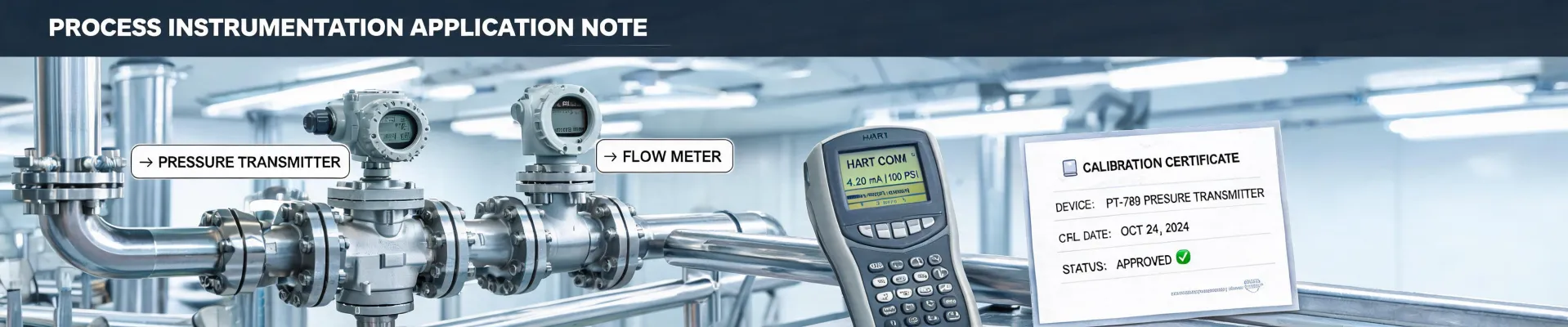
Back in 2020, when I took over purchasing for our controls company, I thought the goal was simple: find the lowest quote and order it. I'm the office administrator for a 40-person instrumentation and controls company, so I manage all instrument ordering—roughly $300,000 annually across 15 vendors. I report to both operations and finance. Three budget overruns later, I learned about total cost of ownership. That lesson is one of the reasons I've stopped defaulting to used test equipment.
Here's my opinion: in 2025, for process and HVAC work, a used oscilloscope is not the smart default. The industry has changed, and the buying process has to change with it.
The Manual Is Not a Nice-to-Have
I used to think manuals were clutter. Download the datasheet, put the PDF in a folder, forget it. Then a technician asked for the Dwyer 626 pressure transmitter manual, and I spent an hour hunting around before realizing it was right there on the product page. It took two minutes—or rather, two minutes after I stopped looking for a separate support portal.
That moment changed how I evaluate instruments. The manual tells you things the datasheet doesn't: range tables, wiring notes, zeroing procedures, and the small details that matter when you're in a hurry. Take the Dwyer differential pressure switch, for example. It's a simple, reliable workhorse. But the manual still matters because the switch point setting and the port orientation vary by model. If I'm buying an emergency replacement for a plant, I don't want to discover those differences after the production line is waiting.
Looking back, I should have asked for the manual before placing the order. At the time, I didn't think a manual mattered. Now it's one of the first things I check. Is the document current? Is it downloadable? Does the product page include a clear spec sheet? If the answer is no, that vendor moves down the list.
Used Oscilloscopes Are Not the Bargain They Used to Be
I'm not anti used oscilloscopes. Honestly, half the bench gear in our repair shop has a used origin story. But there's a difference between a hobbyist buying a secondhand scope and a purchasing manager putting one into a critical measurement path.
A while back, I compared a used oscilloscope and a new unit side by side. The price difference was real—about 35% less for the used scope. But after calibration, new probes, and the two days I spent tracking down a manual, the savings were closer to 12%. Oh, and the used scope had no firmware updates. I should add that the seller's invoice didn't even list the model number. That's a red flag.
I want to say the calibration interval on that used unit was 12 months, but don't quote me on that. The point is, the total cost calculation changed. When I compared the two units side by side, I finally understood why the so-called 'small differences' are only small on paper.
And don't forget shipping. According to USPS (usps.com), as of January 2025, a First-Class Mail letter costs $0.73 and a large envelope costs $1.50. That sounds like nickels and dimes. But when you're returning a sensor for calibration or chasing a missing certificate, those small costs add up to a real line item.
What I Tell Engineers Who Ask 'Which Fluke Multimeter Do I Need?'
One of our engineers keeps a Fluke 189 true RMS multimeter in his kit. It's a classic, and it still does the job. But when people ask me which Fluke multimeter do I need, I always push them to think about the whole package, not just the meter. Is the manual current? Is there firmware support? What is the calibration status? If you're looking at a used 189 on a surplus site, the answers get murky fast.
This is where I've shifted to manufacturers with published documentation. Per FTC guidelines (ftc.gov), advertising and performance claims have to be truthful and substantiated with evidence. So when a manufacturer puts a spec sheet or a manual on a product page, there's a baseline. I still do my own checks, but I have a starting point. A vague auction listing doesn't give you that.
Dwyer is a good example. They cover a broad range—pressure transmitters, flow meters, differential pressure gauges, humidity sensors, level transmitters, air velocity sensors, temperature sensors—and the product pages are consistent. The Magnehelic gauge has been a standard for decades, and even simple products come with the kind of documentation you need. When I can download a Dwyer 626 pressure transmitter manual without emailing anyone, it makes my job easier.
The Pushback I Expect
To be fair, there are exceptions. Used oscilloscopes can be a great deal if you have the engineering time and a calibration lab in-house. At our repair bench, we've made it work. But for a typical process plant or HVAC contractor, the hidden costs are higher. The same goes for an old Fluke 189: if you know how to verify it and you have the equipment to calibrate it, fine. But that's a hobby, not a procurement strategy.
I get why people default to the cheapest option. Budgets are real. But in my experience, the cheapest option stops being cheap the first time you can't find a manual, can't verify calibration, and can't return the product without paying shipping. The old way of saving money by buying used or discount gear isn't necessarily wrong; it just needs a reality check for 2025.
The Bottom Line
The industry is evolving. What was best practice in 2020 may not apply in 2025. The fundamentals haven't changed—you still need accurate, reliable instruments—but the execution has transformed. Documentation, support, and total cost of ownership are now part of the quote.
Personally, I'd rather pay a controlled price for a new Dwyer pressure transmitter with a current manual and a clear spec sheet than save 20% on a used instrument with a history I can't verify. That's not because I'm afraid of used gear. It's because my job is to make the purchasing process smooth, defensible, and repeatable.