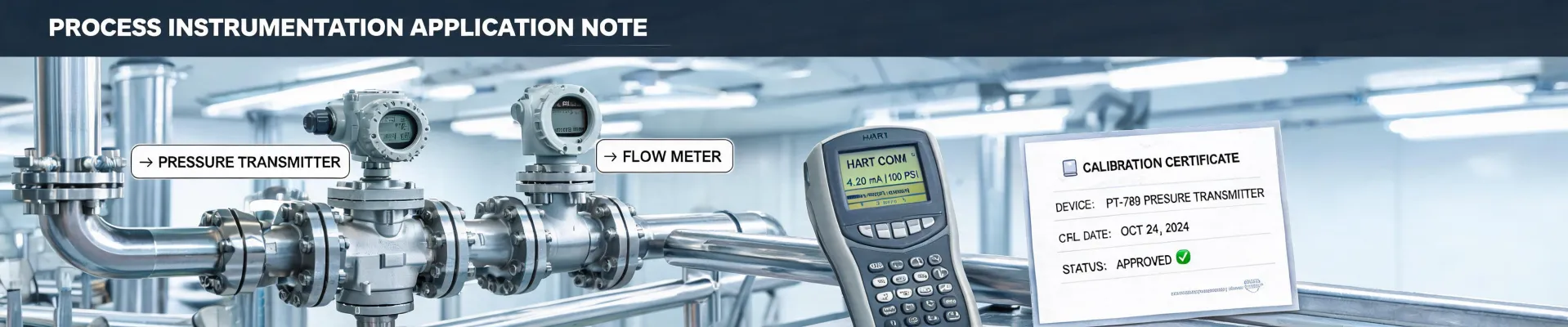
In the quality department, I see a lot of incoming orders. Not just our own orders—orders from engineers who copied a product name into a purchase requisition and hit send. I am a quality/compliance manager at a process instrumentation distributor. I review every spec sheet that goes out, roughly 200 items a year. In 2024, I rejected about 12% of first-pass deliveries for one recurring reason: vague product identification.
The surface problem: a product name is not a specification
The most common request? 'Dwyer CO2 sensor.' Not 'wall-mount CO2 transmitter, 4–20 mA, 0–2000 ppm, with duct probe'—just 'Dwyer CO2 sensor.' Another favorite: 'Dwyer air velocity transmitter.' The brand is right. The category is right. The specification is missing.
Before you blame the person typing the request, look at how they got there. They probably searched 'dwyer co2 sensor,' found a page that looked official, and copied the first product name. The same happens with '117 true rms multimeter' and '1260 hplc.' Those are real instruments, but they are not complete statements of what the user needs.
'117 true rms multimeter' tells me the meter can measure AC accurately on distorted waveforms. It does not tell me whether it has a CAT III rating for mains work. '1260 hplc' tells me the platform. It does not tell me what detector, pump configuration, or injection volume the lab needs. And 'dwyer air velocity transmitter' could be an HVAC low-speed probe or an industrial insertion probe with a different output range.
The deeper cause: we treat model numbers as engineering
I used to assume a model number was enough. If the vendor quoted exactly what the engineer asked for, my job was simple. Three rejected orders later—wrong output, wrong probe length, wrong pressure range—I realized the model number was where our quality problems started.
Model numbers are a compression tool. They compress one manufacturer's catalog into a short string. They don't encode the application. 'Dwyer' is a quality baseline, not an application guide. That's not a criticism of Dwyer—it's true of every brand. A '117 true rms multimeter' from any manufacturer is defined by its model, but what matters in the panel is the safety rating and accuracy class. The same distinction applies to a '1260 hplc' configured for one lab versus another: same model family, completely different system.
The real issue is that searching by product name feels like engineering. 'I specified Dwyer' sounds like 'I did my job.' But a specification should describe the measurement problem: range, accuracy, environment, output, mounting. The product name should be the result, not the starting point.
In my experience, the deeper cause is that engineers are overloaded. They don't have time to review every datasheet. So they rely on a trusted brand and a recognizable model. Which, honestly, I understand. But the quality inspector in me sees the cost: a vague order shifts the engineering from the spec phase to the receiving dock, where it is more expensive to fix.
What vague specifying actually costs
Take a recent example. I had two hours to approve a datasheet before a bid deadline. Normally I would send it to applications engineering for a cross-check—there was no time. I approved it with a note: confirm output. The transmitter arrived with a 30-second filter delay the engineer didn't expect. In hindsight, I should have asked for the application data first. Instead, we paid freight, lost five working days, and the project schedule absorbed the hit.
That was not a $22,000 disaster. But if that vague order had been a 'Dwyer CO2 sensor' in a hospital ventilation system, the wrong range could have meant real safety paperwork.
When I receive a query like 'what is rice lake weighing systems programming language,' I read it differently. The person is not asking for a syntax manual. They are asking, 'Who in my facility can support this?' That question, left unanswered, becomes a maintenance cost. The programming or configuration environment matters because someone has to program the indicator, troubleshoot it, and calibrate it. If you have no one who understands it, you are not buying an instrument—you're buying a mystery.
I don't have hard data on how many vague specifications come from search queries. But based on the orders I review, I'd estimate a third of incorrect orders start with a copied model name rather than a written requirement. Surprise, surprise: the buyer is not always the specifier.
The short version: ask for the job, not the model
If you're buying instruments, here's what works better:
- Write the measurement requirement first. For a Dwyer CO2 sensor: what range, what output, wall-mount or duct, aspirated or not.
- Add the environment. For a Dwyer air velocity transmitter: air temperature, probe length, particulate level, and what your control system expects to see.
- Then, and only then, choose the model number.
For lab equipment like a 1260 hplc, the same logic holds: write the application, then the configuration. For a 117 true rms multimeter, check the safety category before you check the price. IEC 61010 overvoltage categories are part of the design, not an accessory.
And if you're wondering 'what is rice lake weighing systems programming language,' the practical answer is that it is a vendor-specific scripting and configuration environment, not a general-purpose language. The manual and the vendor's support documentation are your authority. If that feels like a warning, it is. A good supplier will say, 'This system needs someone who knows its scripting environment—here is what we recommend.' The supplier who claims 'we can do everything' should make you nervous.
I'd rather work with a specialist who knows their limits than a generalist who overpromises. That is true for suppliers, and it is true for us when we write specifications.
To me, that's the whole point. Brands and model numbers are useful. They are not substitutes for specifications. The measure of a quality part is not the name on the label—it's how well the part was matched to the job. I'd rather see an engineer write 'CO2 transmitter, 0–2000 ppm, 4–20 mA, wall-mount' than 'Dwyer CO2 sensor.' The first one tells me they thought. The second one just tells me they searched.