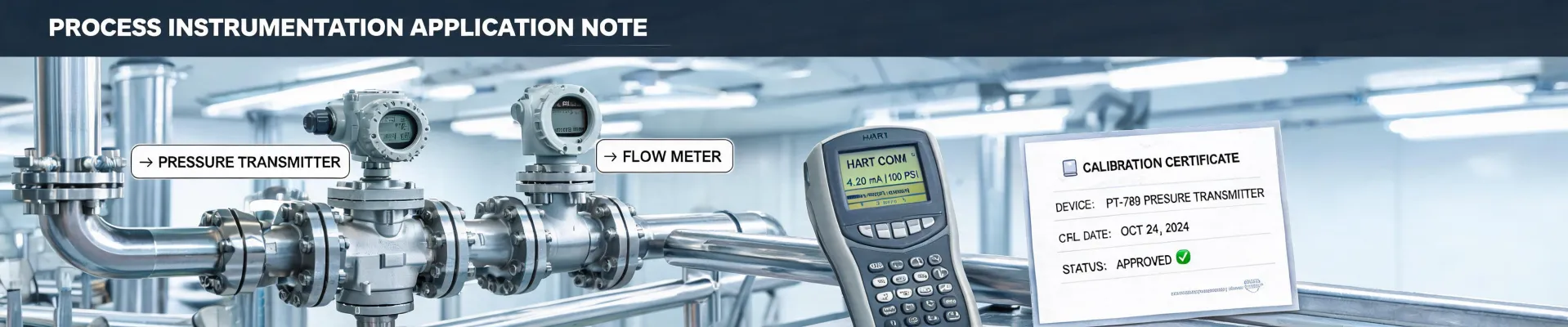
Here's the answer up front: 18% of the first-submission flow meter packages I reviewed in 2024 failed my inspection—and almost none of them failed because the instrument itself was bad. The failures were installation mistakes, configuration errors, and missing paperwork. A good flow meter, even one from a reliable brand like Dwyer, is only as trustworthy as the verification routine around it. Stop reading spec sheets first. Do a mechanical check, a thermal scan, and a register reading against a known volume. In that order.
Why trust me on this? I'm the quality and brand compliance manager at an industrial instrumentation distributor. I review every inbound shipment before it reaches a customer, and I verify every field return before it goes back into stock—roughly 200 items a year across pressure, flow, level, and temperature. Over the past four years, I've rejected about a fifth of first deliveries in some quarters for preventable reasons. We sell Dwyer products, and I've watched more than one perfectly good Dwyer flow meter get blamed for an installation problem.
I also keep an eye on the legal side. Per FTC guidelines (ftc.gov), a claim like 'calibrated' or 'certified' needs evidence. So my first question is always: where's the certificate? The manual is a reference, not proof.
The manual is a starting point, not a guarantee
When you buy through a Dwyer flow meter distributor, the first thing you get—or should get—is the Dwyer flow meter manual. I say 'should' because I've seen rush orders arrive without it. The manual matters. It has the model-specific range, the K-factor, the output scaling, and the installation dimensions.
But the manual can't tell you whether the upstream straight run is long enough, whether the flange gasket is protruding, or whether someone left the bypass valve partially open. I've seen all three after a customer called to say the meter is reading wrong. On two of those calls, the 'bad meter' was working fine once we fixed the piping. That's why I treat the manual as the beginning of the check, not the end.
Everything I'd read about factory calibration says it's the source of truth. In practice, I've seen more field issues from installation and configuration than from factory accuracy. That's not a knock on the factory. It's just reality.
Check 1: Mechanical truth from a dial indicator with magnetic base
Before I look at any electronic output, I look at the physical installation. A dial indicator with magnetic base is the fastest tool I know for this. I clamp the base to a rigid part of the pump or motor, zero the indicator against the coupling, rotate the shaft, and read the total indicated runout. If it's more than a couple thousandths, I stop. The mechanical issue will eventually show up as vibration, pulsation, or unstable flow readings, and no transmitter can compensate for that.
This isn't strictly a flow meter check. It's a process check. I've seen a bad coupling send enough pulsation through the line to make a turbine flow meter look erratic. The meter was telling the truth about a lie. A dial indicator with magnetic base caught the cause in 15 minutes.
Check 2: Thermal scan with a C2 thermal imaging camera
The next thing I do is scan the area with a C2 thermal imaging camera. It's compact enough to keep in my field bag, and it's caught more surprises than any single other tool.
In 2022, I looked at a process line with a flow meter reading 40% low. The transmitter tested fine. The signal wiring tested fine. But the C2 thermal imaging camera showed a heat exchanger bypass that was leaking hot water into the return line. The flow meter was reading a mix, not the process flow. We repaired the bypass, and the reading settled immediately.
Since then, I scan junction boxes, bearings, and valve bodies as part of every acceptance check. You don't need a high-end thermal camera for this. You need a camera that fits in your hand and a curious eye. The C2 is that camera for me.
Check 3: How to read Sensus water meter registers
The last check is the one people ask about most: how to read Sensus water meter registers. If you've ever stood over a Sensus meter with a clipboard and wondered which number mattered, you're not alone. I get asked how to read Sensus water meter registers more often than you'd expect.
For older mechanical registers, read the odometer-style numbers left to right. The black and white digits are the total; the red digits or small dials are fractions. For newer digital iPERL registers, the display cycles through a self-test, then shows the totalizer in gallons or cubic feet. The first stable number with the unit label is the one to record.
But here's the thing: a correct register reading can still be a wrong consumption reading if there's a leak or a stuck check valve downstream. So I always compare the totalizer to a known volume. Fill a test tank, close the downstream valve, and watch the low-flow indicator on the register. If the meter moves while nothing is supposed to be using water, you've found a leak before it becomes a billing dispute.
I'd rather spend 10 minutes explaining how to read a register than deal with a customer who thinks they're being overbilled. An informed customer asks better questions and makes faster decisions. That's not a soft skill; it's a quality tool.
What this routine won't do
These three checks are enough for most acceptance and troubleshooting decisions, but they're not a replacement for calibration. If a meter is going into a custody transfer or a legal billing boundary, you need a NIST-traceable reference, a documented procedure, and maybe a third-party witness. A thermal scan won't prove accuracy. A dial indicator won't correct a bad pressure tap. And reading the register won't tell you whether the meter's internal factor is set correctly.
I still kick myself for not flagging a missing calibration certificate on a rush order a few years ago. The meter was fine, but we had no proof, and the customer had no reason to trust us. It cost us hours of argument and a $22,000 redo. Now I treat paperwork as part of the product.
Even after I approved a 50-unit order for a retrofit, I kept second-guessing. What if storage vibration had damaged the electronics? The two weeks between shipment and commissioning were stressful. The units were fine, but I should have confirmed storage conditions before signing off. The doubt was the signal.
Look, I'm not saying factory accuracy doesn't matter. It does. But the most accurate factory can't save an installation that fights against it. Use the manual. Check the mechanics. Scan for thermal surprises. Learn how to read Sensus water meter registers. Then, when the numbers line up, record the evidence. The field check isn't done until there's a signed form, a photo of the dial indicator setup, and a note on the thermal scan. That habit saves the next argument.