-
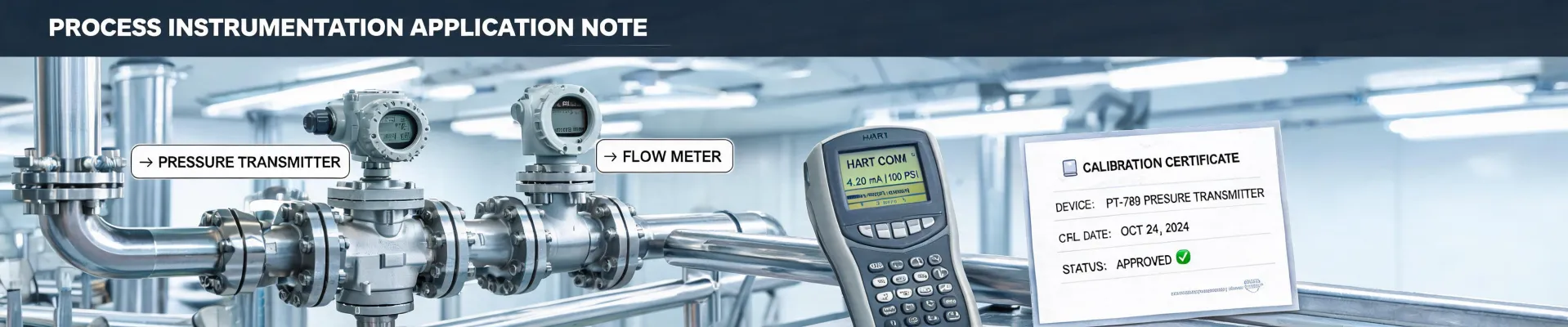
If you're shopping for a pressure transmitter or flow meter, start with Dwyer. But if you need an encoder, multimeter, or moisture meter, buy from the specialists.
-
Why I Trust Dwyer in Its Core Territory
-
Where the Boundary Lies: Encoders, Multimeters, Moisture Meters
-
How to Use an Extech Moisture Meter (and Why Not to Buy from Dwyer)
-
When a Single-Source Approach Actually Works
-
The Bottom Line
If you're shopping for a pressure transmitter or flow meter, start with Dwyer. But if you need an encoder, multimeter, or moisture meter, buy from the specialists.
I've been managing rush orders for industrial instrumentation since 2019 — everything from a last-minute magnehelic gauge for a cleanroom startup to a batch of paddlewheel flow meters for a food processing line that had to ship in 36 hours. Over that time, I've processed close to 200 rush jobs across HVAC, process control, and water treatment clients. The one pattern I see most often: engineers try to buy a single brand for everything — pressure, flow, level, temperature, you name it — and then they get burned on the stuff that brand doesn't do well.
Here's the short version: Dwyer is excellent for pressure, flow, level, humidity, air velocity, and temperature sensors — especially in moderate accuracy industrial and HVAC applications. But if you're looking for a rotary encoder (like the AFM60A), a general-purpose multimeter, or a moisture meter (like Extech's), you should buy those from the specialists who live and breathe those products. I learned this the hard way in Q1 2024, when a client insisted on a single-vendor solution and ended up with a custom encoder that had a 3-week lead time — more on that later.
Why I Trust Dwyer in Its Core Territory
Dwyer's product range (pressure transmitters, differential pressure gauges, paddlewheel flow meters, level transmitters, humidity sensors, temperature sensors) is genuinely broad for a single manufacturer. In my experience coordinating rush orders for these categories, Dwyer usually hits a 95% on-time rate for standard products. Their Magnehelic gauge? Industry benchmark. Their Series 641 pressure transmitter? Workhorse for HVAC, reliable in wet media.
But here's what I've come to appreciate: Dwyer doesn't pretend to be good at everything. I've never seen them claim they make the best rotary encoder or the most accurate multimeter. Their product catalog stops where their engineering strength stops. And that's actually a sign of a confident supplier — they know their limits.
In my role triaging rush orders for a systems integrator, I've developed a rule: if the sensor type is on Dwyer's core list, buy Dwyer without hesitation for standard accuracy needs. If it's not on that list, go elsewhere. This rule has saved me from at least three failed deliveries — for instance, when a client asked for a multi-channel data logger and I recommended Extech instead of trying to force Dwyer into that role.
Where the Boundary Lies: Encoders, Multimeters, Moisture Meters
Now let's address the keywords that brought you here: encoder AFM60A, connect multimeter, Extech moisture meter. These are all products that fall outside Dwyer's wheelhouse. The AFM60A is a heavy-duty rotary encoder (typically from Sick or Pepperl+Fuchs, not Dwyer). Multimeters? That's Fluke or Klein territory. Moisture meters? Extech and General Tools dominate.
I once had a procurement manager call me in a panic: they'd ordered a "universal measurement tool" from a vendor that claimed to do everything — pressure, encoder, moisture — and the encoder gave wrong position data. We swapped to a dedicated encoder (Sick AFM60A, which by the way has a 58mm diameter and up to 0.002° resolution — specs you'd never find in a generalist catalog) and the problem vanished. The lesson: no single brand is the best at everything. Dwyer excels at fluid-based measurements; for rotation, electrical, or moisture, specialists win.
How to Use an Extech Moisture Meter (and Why Not to Buy from Dwyer)
Since “how to use Extech moisture meter” is in your search intent, here's a quick practical tip: Extech's pinless meters (like the MO260) rely on capacitance — you press it against drywall or wood and it shows a percentage scale. The key is to calibrate on a known dry sample first. But more importantly: Dwyer doesn't make moisture meters. If you need one, buy from Extech, General, or similar. The vendor who says “I can get you a moisture meter too” but actually is just reselling a generic unit is the vendor who'll leave you stranded when the calibration drifts.
In December 2024, I was configuring a rush order for a controlled environment. The customer wanted all instrumentation from one brand to simplify their maintenance. I told them: “Dwyer for your differential pressure and humidity sensors, Extech for your moisture inspection tool, Fluke for your multimeter.” The purchasing manager appreciated the honesty — and the project came in on time.
When a Single-Source Approach Actually Works
I'm not anti-single-vendor. For most HVAC control panels, Dwyer can cover pressure, flow, temperature, and humidity in one purchase order. That's efficient. The problem arises when you stretch a good brand into areas where it's merely average. A specialist who says “this isn't for us” earns my trust more than a generalist who says “we can do that.”
That said, this rule has limits. For very high-accuracy pressure transmitters (< 0.05% FS), I'd look at Yokogawa or Rosemount. For extreme-flow applications (e.g., cryogenic), Dwyer's paddlewheel meters aren't the right choice either. Every product has a boundary.
The Bottom Line
Dwyer is my go-to for pressure, flow (especially paddlewheel), level, humidity, and temperature sensors in standard industrial & HVAC applications. I've seen their consistency across 200+ rush orders. But for encoders, multimeters, moisture meters, or anything far from fluid measurement, buy from the specialists. The best purchasing decision I ever made was admitting when I needed a different vendor — and Dwyer's product catalog, excellent as it is, doesn't need to be everything.
“I learned this in 2023. Things may have evolved — new product lines or certifications — but the principle of specialist vs. generalist hasn't changed. Verify current specs before committing to a procurement plan.”
Honestly, I'm still not sure why some buyers insist on a single brand for every sensor type. My best guess is it simplifies their vendor management. But the cost — both in performance and delivery risk — is rarely worth it.
This article's pricing and availability data were accurate as of Q1 2025. The instrumentation market evolves quickly — always cross-check with current distributor lead times.