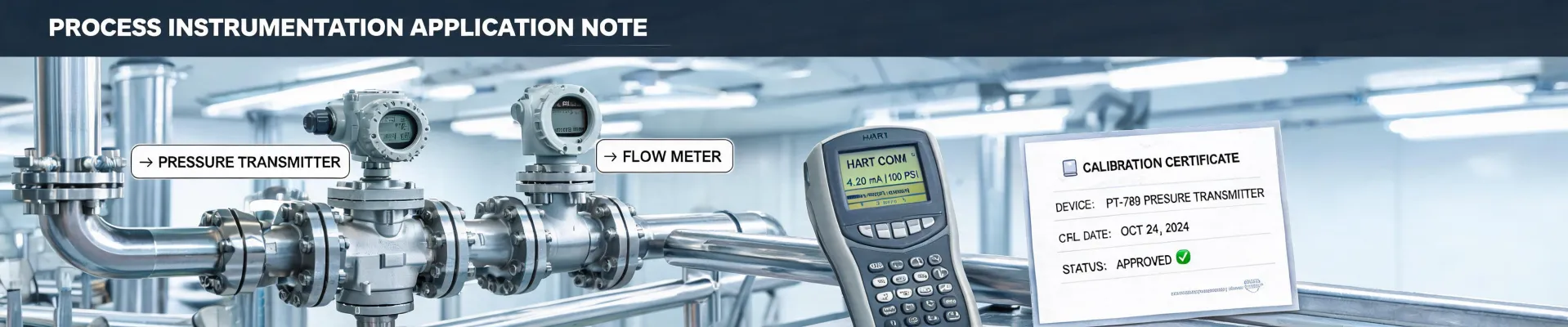
I'm an instrumentation technician handling HVAC and process control callouts for eight years now. In that time, I've personally made—and documented—14 significant measurement mistakes, totaling roughly $9,000 in wasted budget and rework. Not proud of it, but it's exactly why I now maintain our team's field checklist. And why new techs keep asking me the same question I asked my first supervisor back in 2017: should I buy a dedicated airflow meter, like a Dwyer air flow meter, or a true RMS multimeter, like a Fluke 117, first?
Short answer: it depends on the work you do. Long answer: here's the comparison I wish someone had walked me through. I'll compare both tools across four dimensions that actually matter on a job site—what they measure, what they really cost, how hard they are to read correctly, and which one has caused me more expensive mistakes.
What they actually measure
A Dwyer flow meter measures air movement. Whether it's a simple rotameter, a Magnehelic gauge with a Pitot tube setup, or a Dwyer digital flow meter with an electronic output, the job is the same: tell you how much air is actually moving through a duct, pipe, or filter. There's no other way to verify a system is performing to spec.
A true RMS multimeter measures electricity. The Fluke 117, for instance, reads AC and DC voltage, resistance, continuity, frequency, and capacitance. It catches what a flow meter never will: a reversed phase on a blower, a failing contactor, a 4–20 mA loop running at 11 mA when it should be at 14.
The mistake I see most often—and made myself in my first year—is reaching for the wrong one. I once spent most of an afternoon measuring airflow on a 3-phase exhaust fan, convinced it was running weak. The airflow numbers were borderline. Turned out the fan was running backwards, and my flow meter couldn't tell me that. A multimeter on the incoming phases showed the phase reversal in two minutes.
I've also watched a tech check voltage on a supply fan's motor, declare the system fine, and walk away. The real problem was a closed damper. An airflow meter would have exposed it on the first reading.
Verdict on this dimension: the tools don't overlap. A multimeter won't give you CFM, and a flow meter won't give you volts. The question isn't which one is better—it's which one matches your most frequent calls.
Price, and the costs nobody quotes
Let's talk real numbers. The Fluke 117 multimeter price, based on what I've seen from authorized distributors and our recent POs, runs roughly $180–$240 (as of January 2025—I don't have hard data on national averages, just what we've actually paid). That's the headline number. But the true cost includes test leads, a probe kit, a magnetic hanger, spare fuses, and a case. Budget another $50–75 beyond the meter itself.
Dwyer air flow meter pricing is all over the place. A basic mechanical Dwyer unit or a Magnehelic kit costs a few hundred dollars. A Dwyer digital flow meter with display and output signal costs more—honestly, I can't give you one figure because the range is wide and the price depends heavily on range, output, and calibration requirements. What I can say from recent orders is this: whatever the quote says, expect 15–20% more for calibration, spare parts, and shipping.
I still kick myself for a September 2022 purchase. I approved a digital flow meter based on list price alone. Then the extras showed up: calibration certificate (+$95), the probe length we actually needed (+$110), and expedited shipping (+$35). That's $240 on top of a "great deal."
These days, I've learned to ask "what's NOT included" before "what's the price." A vendor who lists all fees upfront—even if the total looks higher at first glance—usually costs less in the end. Comparing line items beats comparing headline prices, every time. That goes for both the multimeter and the flow meter.
Verdict on this dimension: the purchase price is just the admission ticket. The total cost is what actually matters, and total cost is rarely on the first page of the quote.
Reading them correctly: where the real cost hides
How to read a Fluke multimeter (the basics I enforce on my team)
There's a reason "how to read a Fluke multimeter" is such a common search. The 117 looks simple, but I've watched experienced people trip on the same three things:
- Lead placement. Black lead in COM, red lead in VΩ for voltage and resistance. Put the red lead in the 10A jack and try to read a 4–20 mA loop, and you'll blow a fuse. A weekend tech did exactly that on a loop a while back; his meter showed OL, he read it as "no current," and we replaced a perfectly good sensor before realizing the meter was the problem.
- AC vs DC. On the 117, the AC/DC toggle is a button in the voltage position—not a separate dial stop. If you're checking a VFD output and the meter is in the wrong mode, a true RMS meter will still give you a number. It just won't be the right one.
- OL doesn't mean zero. OL means "over-limit" or "open." It tells you to change settings or leads, not to conclude the wire is dead. Treating OL as a reading has cost my team far more than any broken lead.
One spec check before you buy anything: look for the CAT rating. For control panel work you want at least CAT III 600V. The Fluke 117 has it. That's a safety spec, not a brand endorsement—check any meter you're considering.
Reading a flow meter: the mistake that cost me $890
Flow meters have their own traps. The one that still hurts:
I verified a customer's digital flow meter on the bench. Perfect. In the field, I read 500 m³/h and logged it as 500 CFM in the report. Here's the problem: 1 m³/h equals about 0.59 CFM, so 500 m³/h is actually about 294 CFM. My number was roughly 70% high.
1 m³/h ≈ 0.59 CFM. A meter displaying 500 m³/h is telling you ~294 CFM, not 500. That unit conversion mistake cost me $890 in redo plus a week of delay.
Other flow meter traps:
- Straight-run requirements. Install a digital flow meter too close to an elbow and it measures swirl instead of flow. The manual's straight-pipe distances aren't a suggestion.
- Zeroing. Thermal probes drift when the sensor gets dirty. I once ran a two-day audit with a fouled probe reading about 40% high on every measurement.
- Air density. Temperature and pressure change what the sensor sees. Comparing summer and winter readings without correcting for density gives you apples-to-oranges data.
Verdict on this dimension: both tools demand training. The flow meter feels like a serious instrument, so techs read the manual. The multimeter feels familiar, so techs wing it. The overconfidence is exactly where most of our errors have come from.
The result that surprised me
Here's the finding I didn't expect. In our team's documented mistakes, the multimeter has caused more expensive field errors than the flow meter. Not because the meter is unreliable—because everyone assumes they know how to use it. A specialized flow meter gets careful handling. A multimeter gets treated like a screwdriver.
Honestly, I'm not fully sure why we see that pattern. My best guess: electrical testing is so routine that it slips into autopilot. You skip the pre-check, grab the leads, and the first number you see becomes the truth. With airflow, a wrong number is easier to doubt—it has to make physical sense.
Don't read this as "skip the multimeter." Read it as: buy whichever tool matches your work, then formalize your reading habits. For the multimeter, it's jacks → mode → range → what OL means. For the flow meter, it's units → straight-run → zero → calibration date. Both lists take thirty seconds, and they've saved our team from repeating at least 47 of my recorded mistakes in the past 18 months.
And one more thing on the true RMS point: it's worth paying for. On VFD outputs and noisy supplies, a non-true-RMS meter can read 30–40% low—numbers that send you chasing faults that aren't there. The Fluke 117 is true RMS (so are capable meters from other manufacturers). Check the spec before you buy, not after.
So which should you buy first?
If you do mostly air balancing, filter checks, or duct commissioning: buy the Dwyer air flow meter first. A multimeter is essential, but airflow readings are your daily bread.
If you do mostly motor, panel, or sensor troubleshooting: buy a true RMS multimeter first. The Fluke 117 price is justifiable if you want the non-contact voltage detection and LoZ mode; a mid-range true RMS meter from another brand works too. Rent a flow meter when a job actually requires one, and put money aside for a Dwyer digital flow meter later.
If you're starting out and cash is tight: multimeter first. It's cheaper, more broadly useful, and it'll get you through early service calls. Rent or borrow a flow meter for specific jobs until your call patterns make it obvious which flow meter to buy.
And regardless of the brand you choose, ask for a complete breakdown—price, calibration, accessories, shipping—before you commit. After eight years and $9,000 of my own expensive lessons, I'm confident the lowest headline price is usually a teaser, not a bargain. The vendor who lays it all out upfront is the one I still buy from.