Why This Comparison?
I manage purchasing for a 140-person manufacturing facility. Every instrument purchase order crosses my desk—roughly $380,000 in annual spend across 8 vendors, from pressure transmitters to thermal cameras to lab equipment. When I took over purchasing in 2020, I was told to "just reorder what we always ordered." That meant analog pressure gauges, mostly.
By our 2024 equipment refresh, I had quietly stopped ordering analog gauges and was buying the Dwyer 626 pressure transmitter instead. This is a head-to-head comparison for anyone facing the same choice.
What We're Comparing
An analog gauge is a dial. A needle. It sits on a pipe and waits for a human to read it.
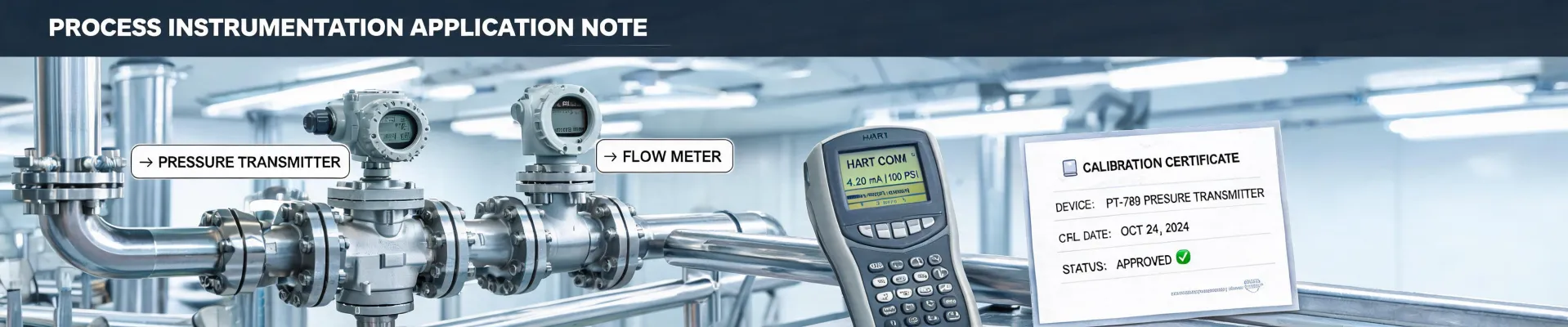
The Dwyer 626 pressure transmitter does what a gauge does but sends a 4–20 mA signal to your PLC or controller. It reads locally and remotely. That difference sounds small. It isn't.
The comparison below covers four dimensions: cost, installation, data, and reliability. Not every application needs a transmitter. But more applications need one than most managers assume.
Cost: Purchase Price vs. Lifetime Spend
Here's where the sticker shock happens. Analog gauges cost $50–120. The Dwyer 626 runs around $200–280, depending on range and output type. That's about 2.5x the upfront price, based on my 2024 purchase orders.
But the lifetime math reverses.
Every one of our mechanical gauges needed annual recalibration. A technician, a calibration rig, roughly 35 minutes per gauge. With 28 gauges, that was about 16 hours of skilled labor per year. On one calibration task. Then there's data collection. When production requested two weeks of pressure readings to diagnose a compressor issue, we had to send someone to read 14 dials twice a day. Fourteen readings, twice daily, two weeks. That's not an exaggeration.
The 626s connected to our PLC cost $0 in calibration labor in 2024. The data export took five minutes. Simple.
Shipping matters too. We buy through a distributor, and logistics costs have crept up across the board—USPS First-Class Mail went to $0.73 per ounce in January 2025 (per usps.com), and that trickles into every parcel quote we see. I now batch orders to keep shipping from eroding the savings.
A quick side note from experience: two years ago, I ordered gauges from a new vendor that quoted 30% lower prices. The invoicing was a mess, finance rejected the expense report, and I ate $900 out of the department budget. Now I verify invoicing capability before placing any order. The cheapest option in the world is expensive if it creates an administrative nightmare. Prices as of January 2025; verify current rates.
Installation: Which One Actually Goes In Easier?
I assumed the mechanical gauge would win this one. It has one process connection and no wires. My assumption was wrong.
The gauge installs fast—if you have a tech who knows what they're doing. But "knows what they're doing" was the problem. A bad install means a leaking fitting or a gauge that reads off. Both happened on our floor.
The Dwyer 626 is a two-wire loop-powered device. It's fairly straightforward for an electrician to wire. The full install—mounting, wiring, zeroing, commissioning—took our electrician about 90 minutes for the first unit. That included reading the manual out loud, which he did partly for comedic effect.
Honestly, I'm still not sure why the term "loop-powered" confused me when I first ordered these. My best guess is I assumed it meant the device didn't need an external power feed. It doesn't need a separate supply, but it does need the receiving device to generate loop current. Once the electrician explained that, everything clicked.
Net-net: roughly equal install time. The transmitter needed more planning; the gauge needed more skilled piping work. (Note to self: I still owe accounting that side-by-side install spreadsheet I promised.)
Data: The Dimension That Reverses the Decision
This is where Dwyer pressure sensors-transmitters as a category pull ahead so far it stops being close.
An analog gauge gives you one data point per glance. A transmitter feeds continuous data into your control system. That's not a feature comparison. That's a category difference.
Why does this matter? Because in 2025, someone in your facility will ask for pressure data. Maybe it's a compliance audit. Maybe it's an energy assessment. Maybe it's troubleshooting a recurring equipment failure.
With the 626, you open the PLC and export the trends. Done. With a dial gauge, you assign someone to clipboard duty.
I also learned the hard way to check vendor claims. A sales rep once told me a product "never needed calibration." Per FTC guidelines (ftc.gov), claims need substantiation. I asked for the data. He couldn't produce it. I stopped taking marketing language at face value.
Reliability: What I Actually Worried About
Analog gauges are famously durable. A bourdon tube and a gear barely ever fail.
Even after choosing the 626, I kept second-guessing. What if the solid-state electronics drifted or the display died? The two weeks until the first calibration verification were stressful.
The results: the 626 was within spec. We checked again at six months. Within spec again. I won't claim electronics are literally immortal, but the 626 has needed zero attention since commissioning. That aligns with what other purchasing contacts I know have experienced.
Is it possible we got a good batch? Sure. That's true of any product. But after 18 months, I'm not concerned. What I mean is, I've stopped mentally categorizing the 626 as "new and unproven" and now think of it as the standard option. The old dials, by comparison, feel like a choice you'd make only if data is truly irrelevant to the application.
So Which One Should You Buy?
Buy the analog gauge if:
- You need a local reading only, and nobody will ask for a trend or log
- The location has no PLC or controller nearby
- Budget is genuinely tight this fiscal year
- You have a technician who can recalibrate on schedule
Buy the Dwyer 626 pressure transmitter if:
- You have a PLC or control system with an unused analog input
- You think data logging might be in your future—even "maybe one day"
- You want to stop assigning clipboard reads to junior techs
- You're tired of paying annual calibration labor for instruments that just sit there
For our facility, the 626 was right for 9 out of 14 new measurement points. Four stayed as local gauges. One got a heavier-duty pressure sensor because the location sees extreme temperature swings (circa 2024, at least).
The Same Pattern Beyond Pressure
This digital-versus-analog shift isn't unique to pressure. I've watched the same evolution in other instrument categories we buy.
The e4 thermal imaging camera we purchased for maintenance was initially considered a luxury. Now it's a standard tool for monthly switchgear inspections and steam trap checks. The upfront purchase hurt. The ROI showed up the day it caught a failing breaker before the panel went down.
We purchased an operating microscope for the precision assembly line in 2023 after two rejected customer samples were traced back to missed visual defects. Nobody questions that purchase anymore.
And the Extech moisture meter? That was a small purchase that solved a recurring complaint about damp storage areas. I had to research how to use the Extech moisture meter correctly at first—the pinless mode isn't intuitive—but once the facility team got it, they used it quarterly without a second thought.
The pattern is always the same. The old tool seemed fine because nobody asked for more. The new tool costs more upfront, then quietly pays for itself in saved time, saved rework, and better data.
The Bottom Line
What was best practice in 2020 isn't necessarily wrong in 2025. But it's worth revisiting. If your facility is still walking around reading dial gauges, ask yourself whether the data is actually being used. If the answer is no, the analog gauge might be fine. If the answer is "we wish we had it," it's time to look at the Dwyer 626.
The fundamentals haven't changed—you still need to measure pressure accurately. But the execution has transformed. For most modern facilities, the transmitter is the better buy.