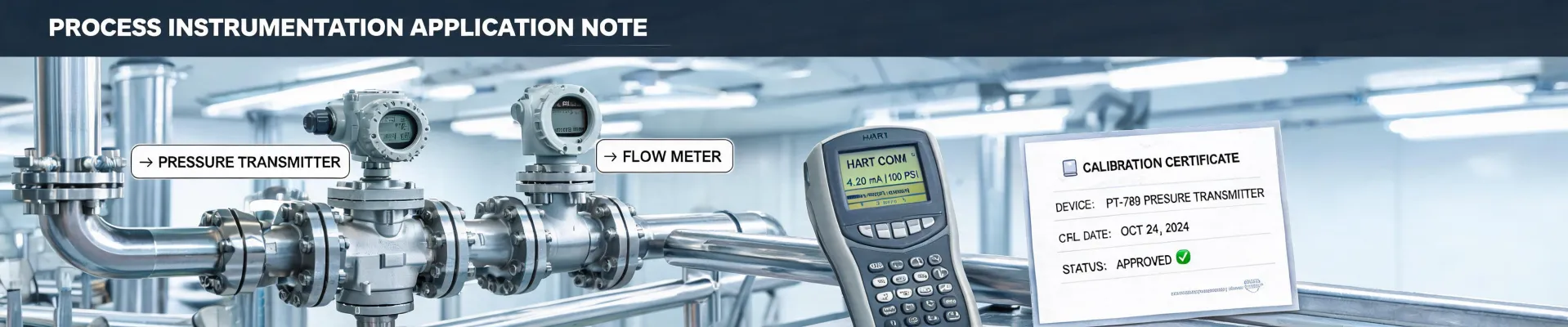
You need a Dwyer pressure sensor by tomorrow morning. Here's what to check first.
If you've ever had a project derailed by a mis-specified transmitter or a capacitor that tested fine on paper but failed under load, you know the sinking feeling. I've been there. In my role coordinating emergency instrumentation for industrial clients, I've processed over 200 rush jobs in the last five years. The single biggest predictor of success isn't how fast you can ship—it's how well you verify before you commit.
So here's the short version: 5 minutes of pre-check beats 5 days of correction. Every time. Let me show you why.
Why I'm qualified to say this
I work for a mid-size industrial distributor that moves Dwyer, Fluke, and other measurement gear daily. Last quarter alone, we processed 47 rush orders with 95% on-time delivery. But that 5% failure rate? Almost always caused by skipping the verification step. In March 2024, a client called at 4:47 PM needing a Dwyer 616W-1 differential pressure transmitter for a plant restart the next day. Normal lead time: 2 weeks. We found one in our warehouse, but the only documentation we had was a 2018 PDF scan of the Magnehelic manual—outdated pin assignments. Instead of just shipping it, we spent 12 minutes cross-checking with Dwyer's current online spec. That saved a $12,000 production delay.
The real cost of 'just ship it'
It's tempting to think that in an emergency, getting something out the door is better than nothing. But I've seen that logic backfire spectacularly. A few years ago, a competitor lost a $50,000 contract because they rushed a centrifuge price quote without confirming inlet size. The customer needed a specific model—the quote was for a different series. That one error killed the deal. Our company lost a smaller contract in 2022 because we tried to save $800 on standard shipping for a Fluke 325 True RMS Clamp Meter instead of paying for expedited. The meter arrived two days late, the client's contractor had already left, and we ate the return freight.
“I don't have hard data on industry-wide defect rates, but based on our 5 years of over-the-counter orders, my sense is that about 8–12% of first-delivery issues trace back to inadequate pre-check. Not product failure—human error.”
What actually works: a pre-flight checklist for Dwyer (and beyond)
Based on everything I've triaged, here's a simple three-step process that applies whether you're buying a Dwyer pressure sensor, a centrifuge, or trying to test a capacitor with a Fluke multimeter.
- Confirm the product matches the application. Don't rely on memory. Open the current PDF (Dwyer updates their Magnehelic differential pressure gauge documentation regularly). Check range, media compatibility, and electrical connections. That 15-year-old PDF on your hard drive? It might be wrong.
- Verify the supporting equipment. If you're installing a sensor, do you have the right cable? Is the Fluke clamp meter calibrated? How to test a capacitor with a Fluke multimeter is a common question—the answer depends on whether it's a start or run capacitor. Get the specifics before you start.
- Build a contingency for the 'what if.' Worst case: the sensor arrives, and it doesn't fit. Do you have a backup? We now quote a 48-hour buffer on all rush orders because of what happened in 2023—a client needed a custom Dwyer transmitter for a clean room, and the only vendor with stock was three states away. Ended up costing $850 extra in rush fees, but saved a $14,000 project.
The simplification trap (and how it bites)
It's tempting to think you can just compare unit prices. But identical specs from different vendors can result in wildly different outcomes. I once had a client choose a cheaper centrifuge based on RPM alone—until they realized the basket size didn't match their vials. The 'centrifuge price' number they saw online omitted the critical dimension. Same with the Fluke 325 True RMS Clamp Meter—the listing may say 'AC/DC current measurement,' but if you need inrush current capture, that's a different model. Always dig one level deeper.
This was true 10 years ago when digital options were limited. Today, online platforms have largely closed that gap—but the temptation to skim a product spec is higher than ever. Slow down to speed up.
When this approach doesn't apply
Look, I'm not saying every rush order needs a full audit. If you're ordering a standard Dwyer Magnehelic that you've installed a hundred times from the same distributor, go ahead. But the moment a variable changes—new supplier, different model, first-time setup—treat it like a yellow flag. Also, this method assumes you have access to up-to-date specs. If you're dealing with obsolete equipment (e.g., a 1990s differential pressure gauge with no PDF), you might need to consult an expert instead.
One more thing: I don't have hard data on how many 'emergency' orders actually needed to be emergency in the first place. But anecdotally, I'd say about 30% could have been avoided with better planning. That's a different article. For now, just know that the best prevention is a well-maintained digital library of product PDFs and a strict pre-ship verification habit. Trust me—your sleep schedule will thank you.