The Audit That Changed Everything
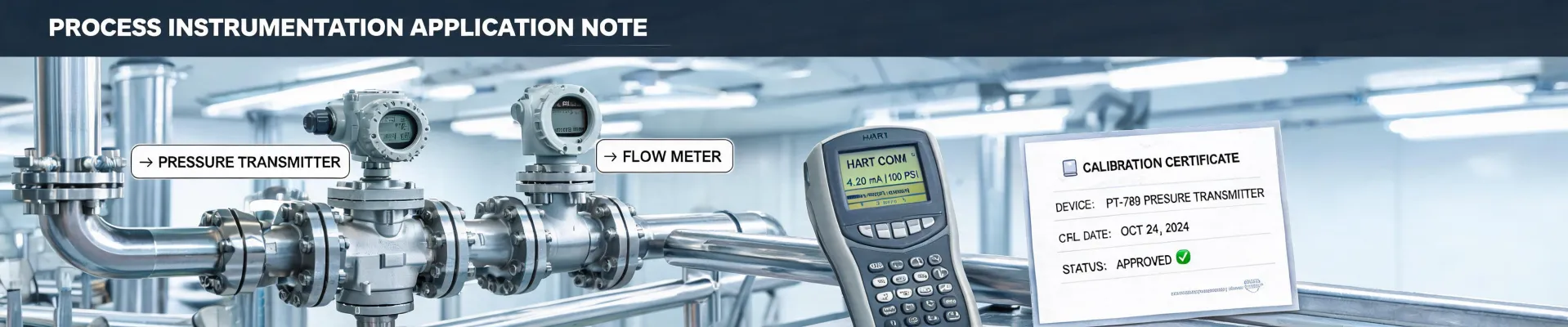
It was a Tuesday morning in our Q1 2024 quality audit. I was reviewing a batch of 150 flow transmitters we'd sourced for a new HVAC system—one of those high-stakes projects where everything has to work on day one. The spec sheet called for ±1% accuracy, IP65 enclosure, and a 4-20mA output. Standard stuff for a dwyer flow meter application.
Except the units we received didn't match the spec. The enclosure rating was fine. The output was right. But the accuracy? I ran the calibration check twice (because the first result made me think the test rig was broken), and the numbers kept coming back nearly 2.5% off at the low end. That's not within ±1%. That's not even within the ±2% you'd expect from a budget meter.
I remember staring at the test report and thinking: how did we get here?
We'd chosen this vendor because their quote was lower. Not drastically lower—maybe 15% below the market rate for a reputable industrial flow meter. But when you're equipping a 50,000-square-foot facility, 15% adds up fast. Or so I thought.
Turns out, that 15% savings was a mirage.
The Cost of 'What's NOT Included'
I called our contact at the vendor and asked for the calibration certificates. They sent a one-page PDF that said 'Factory Calibrated.' No traceable reference. No actual data points. I asked, 'Is this NIST-traceable?' Their answer: 'We can do that as an extra. It's $40 per unit.'
I literally laughed. For a moment. Then I wasn't laughing anymore.
That $40 per unit was never mentioned in the original quote. Neither was the pressure test, the cable gland upgrade we'd need for the IP65 rating (another $12 per unit), or the minimum order quantity that was actually 200 units not 150 (we had to buy 50 we didn't need).
I went back and forth between sticking with this vendor and scrapping the entire order for two weeks. If you've ever had to make that call on a tight construction schedule, you know the sleepless nights. You're looking at a $22,000 redo if we cancel, with a two-week delay. Or you swallow the hidden costs and learn an expensive lesson.
I chose the lesson. We rejected the batch, and they redid it at their cost (after I threatened to escalate to my legal team). But the damage was done: the project timeline slipped, and the trust was gone.
What I Learned About Opaque Pricing
Here’s the thing I came away with: the vendor who lists all fees upfront—even if the total looks higher—usually costs less in the end.
I started applying this principle to every major equipment buy. Now, when I get a quote, I send a follow-up email with a simple list:
- Is the calibration NIST-traceable? Included or extra?
- Are the cable glands, fittings, and connectors included?
- What's the minimum order quantity vs. what I need?
- Is the shipping cost in the quoted price?
- Are there any setup fees for custom configurations?
I used to think asking these questions was being overly suspicious. Now I know better. The vendors who answer clearly and without hesitation are the ones I can trust. The ones who get defensive or vague? I've learned that's a red flag worth taking seriously.
And you know what? It works. We recently spec'd a dwyer IEF-SN electromagnetic flow meter for a new process line. The quoted price was higher than a cheaper alternative, but the vendor (a distributor we'd vetted) sent a one-page ‘what's included’ checklist. The total, with traceable calibration and all required fittings, was within budget. The cheaper alternative? When I asked for their checklist, they came back with three hidden fees that pushed the total above the dwyer solution.
I'm not saying dwyer meters are always the right answer. I'm saying the transparency of the pricing was the real differentiator.
The Insulation Tester Parallel
That experience also changed how I think about test equipment. I remember a similar situation with insulation testers. We were comparing models like the 1507 insulation resistance tester and the 1587 insulation multimeter. Both are solid instruments, but the pricing models were all over the place.
The 1507 is more of a dedicated unit—simpler, single-function. The 1587 is an insulation multimeter combo. On paper, the 1587 looks like a better deal: two tools for the price of one. But when you look at the specs, the 1587's insulation range isn't as wide as the 1507's (in many versions), and its continuity accuracy might not match a dedicated unit.
The insulation tester vs megger comparison is another example. A megger is essentially a high-resistance insulation tester, but the two terms aren't always interchangeable in practice. Some vendors use 'megger' as a brand-specific term (Fluke, for instance, has their own line), while others use it generically. If you don't ask 'what's the actual test voltage range?' you might end up with a unit that tests at 500V when you need 1000V (common for motor winding testing per IEEE 43). An extra $100 for the higher-voltage model up front beats a failed field test and a $5,000 motor teardown later.
The point is: the transparent pricing principle applies everywhere. Whether it's a flow meter, a dielectric tester, or a business card (I once paid 50% more because the quote didn't include setup fees for a custom die cut, and the ‘standard’ template didn't fit my artwork—circa 2023, if I remember correctly).
My Standard Protocol Now
Here’s what my current procurement checklist looks like (I’ve refined it over three years of doing this):
- Get the price sheet in writing. Don't trust verbal quotes. Ever. I learned that the hard way (see above).
- Ask 'what's not included' before you ask for a discount. The cheapest quote is often the one with the most exclusions.
- Check the certifications. If it's an instrument, I want traceable calibration. If it's a material, I want the product data sheet. If the vendor can't provide it, that's a dealbreaker.
- Build a trust budget. I allocate 5-10% of my equipment budget for 'doing business with a known reliable vendor' vs. 'taking a chance on a cheaper unknown.' That 5-10% has saved me more than it's cost.
- Request a sample or a spec review. For instruments, I'll ask for a unit on loan for a quick evaluation. For printed deliverables (flyers, boxes), I ask for a physical proof. The vendors who comply are usually the ones who deliver.
Does every purchase go perfectly now? No. I've still had the occasional hidden fee slip through. (I paid a $60 rush fee in November because I didn't read the fine print on the shipping page—ugh, still embarrassing.) But I'd say we've reduced unexpected cost overruns by about 75% since implementing this protocol. That's on a 50,000-unit annual order volume, which is roughly $18,000 in savings we didn't have before.
There's something satisfying about a purchase that goes exactly as quoted. The price you see is the price you pay. No surprises. After all the stress of that 2024 audit, finally having a system that works—that's the payoff. It means I can sleep through the night without worrying about what's hidden in the next vendor's fine print.
Now, I always tell my team: the best price is the one you can see from start to finish. If a vendor can't show you every line item, that vendor isn't worth your time.